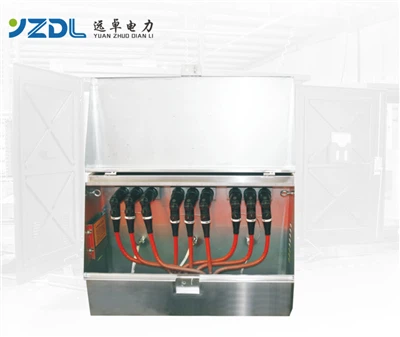
If you’re a home theater enthusiast, studio engineer, or just someone building a high-quality audio setup, you’ve probably stumbled over a mess of cables in your wall, closet, or under your entertainment center at some point. And if you’ve researched ways to organize those cables, you’ve likely come across cable distribution boxes. That’s where I come in—for the last 12 years, I’ve run a small cable distribution box supply business, talking to hundreds of customers who ask the same question: “Can a cable distribution box be used with audio cables?” Cable Distribution Box
It’s a fair question, and the answer isn’t a simple yes or no. Over the years, I’ve seen folks try to cram all their audio cables into standard cable boxes, only to deal with static, muffled sound, or even shorted connections—and others who’ve used audio-specific distribution boxes without a single issue. Today, I’ll break down the science, the do’s and don’ts, and what you need to know to make this work right.
First, let’s start with what a cable distribution box actually is, because not all boxes are created equal. At its core, a cable distribution box is a centralized hub that lets you route, organize, and connect multiple cables in one place. It’s designed to reduce clutter, protect cables from damage (like being stepped on or pinched), and sometimes even provide a small amount of shielding against electromagnetic interference (EMI)—that static hum you hear when your audio is near a Wi-Fi router, power line, or another electronic device.
But most standard cable distribution boxes (the kind you’ll find at big-box stores for TV, coaxial, or ethernet cables) aren’t built for audio. That’s the key distinction. Audio cables—whether they’re analog RCA, XLR, 3.5mm, or even digital optical (TOSLINK) or coaxial audio cables—have unique requirements that general-purpose distribution boxes don’t always meet.
Let’s talk about why that matters from an engineering standpoint. Audio signals, especially low-level analog signals (like the output from a turntable or a microphone), are extremely sensitive to EMI and radio frequency interference (RFI). Even a small amount of interference can turn clean audio into a muffled mess or add a persistent static hum. Standard cable boxes are usually made of thin plastic or lightweight metal that doesn’t block EMI effectively. They also often share space inside the box with power cables or coaxial cables, which emit their own EMI—so when you run audio cables next to those inside an unshielded box, you’re asking for trouble.
Another factor is cable routing. Audio cables, especially balanced XLR cables, need to be terminated properly with secure connectors to maintain signal integrity. Many standard distribution boxes have generic slots or cutouts that force cables to bend too sharply, which can damage the internal wiring of audio cables over time. For example, a 90-degree bend in a coaxial video cable might be fine, but a sharp bend in a thin RCA audio cable can fray the center conductor or the shielding, leading to signal loss.
That said, it’s not impossible to use a cable distribution box with audio cables—if you pick the right box and use it correctly. Over the years, I’ve worked with customers who’ve had great results using our audio-specific distribution boxes, and even some who’ve repurposed high-shielding general-purpose boxes for audio, as long as they follow a few key rules.
First, know your audio cable type. Let’s break down the most common audio cables and how they pair with distribution boxes:
Analog unbalanced cables (RCA, 3.5mm, speaker wire): These are the most common for home theater setups, portable speakers, and basic audio connections. They’re less sensitive than balanced cables, but still prone to interference if not shielded. For these, a distribution box with internal aluminum shielding and separate compartments for audio and power/coaxial cables works well. I’ve had customers use our medium-duty audio distribution boxes for 8-12 RCA cables, and as long as they keep power cables separate inside, they report zero static or signal loss. The key here is to avoid cramming audio cables right next to power cables in the same slot—separate them with a small barrier or route audio cables through dedicated slots if your box has them.
Balanced analog cables (XLR, TRS): These are the go-to for studio setups, live sound, and high-end home audio because they’re designed to cancel out EMI. But even balanced cables benefit from proper organization and shielding. The problem with standard distribution boxes here is that many don’t have enough space for the bulkier XLR or TRS connectors, so people end up forcing them in, bending pins, or having loose connections. Our heavy-duty audio distribution boxes have extra-wide openings for connectors and internal dividers to keep balanced cables separated from other signals, which prevents crosstalk (unwanted noise from adjacent cables). For studio owners who use 16+ XLR cables, this is a game-changer—instead of messy cable runs across the floor, they can route all cables through the box to a patch bay, keeping their recording space clean and their audio crisp.
Digital audio cables (TOSLINK, coaxial digital): Optical TOSLINK cables use light to transmit audio, so they’re immune to EMI and RFI—this is a huge plus. That means you can route TOSLINK cables through almost any distribution box, as long as you don’t bend them too sharply (a bend radius of at least 3 inches is non-negotiable for fiber optic cables). Coaxial digital audio cables are similar to analog RCA but usually have better shielding, so they can work in a standard distribution box as long as you keep them away from power cables. I’ve even seen customers use our standard cable distribution boxes for TOSLINK runs in their home theater, and they report zero issues.
Now, let’s talk about the mistakes I see people make when trying to use a cable distribution box with audio cables—mistakes that lead to bad experiences.
The biggest one is using a standard, unshielded distribution box for low-level audio cables. For example, a customer last year came to me frustrated because his turntable audio was full of static. He’d crammed all his RCA cables for his turntable, CD player, and TV into a cheap plastic distribution box that also had power cables running through it. The turntable’s phono signal is only a few millivolts—way weaker than line-level audio—and the EMI from the power cables inside the box swamped the signal. We recommended he swap to our audio distribution box with internal metal shielding and separate compartments for each cable type, and after he re-routed his turntable cable alone in its own slot, the static was gone.
Another common mistake is bending audio connectors too tightly. I’ve had a freelance sound engineer come to me complaining about loose XLR connections at live events. He was using a standard distribution box with narrow slots, so when he routed his XLR cables, he had to bend the connectors at a 45-degree angle to fit them through the opening. Over the course of a weekend of shows, the repeated bending loosened the pins in the XLR connectors, leading to intermittent audio dropouts. Our distribution boxes have sloped, wide openings that let connectors sit at a natural angle without sharp bends, solving that problem.
Finally, some people mix audio cables with other types of cables in the same distribution box without separation. Coaxial cables, Ethernet cables, and power cables all emit EMI, even if you can’t hear it. When they’re packed next to audio cables inside a confined space, that EMI builds up and causes noise. The fix is simple: use a distribution box with internal dividers, or if you’re using a general-purpose box, place a piece of foam or cardboard between audio cables and other cables to block the EMI.
So, is there a case where you shouldn’t use a cable distribution box with audio cables? Only if you’re dealing with extremely long audio runs (over 50 feet for analog unbalanced cables) or high-sensitivity setups like a professional vinyl mastering studio. In those cases, you’d want a dedicated audio distribution system, which includes shielded cables, balanced connections, and a proper patch bay—but even then, a distribution box can be used to organize the patch connections.
For most people, though—home theater owners, small studio operators, casual live sound users—a cable distribution box can absolutely work with audio cables, as long as you choose the right box and follow the basic rules. That’s what I’ve learned over 12 years in this business: the best solutions aren’t always fancy new gear, they’s matching the right product to your specific needs.
Now, if you’re not sure which distribution box is right for your audio setup, or you have questions about organizing your cables without sacrificing sound quality, I’m here to help. I’ve worked with everything from small apartment home theaters to large commercial sound systems, and I can guide you to the right product, whether you need a basic box for a few RCA cables or a heavy-duty setup for a studio with dozens of XLR connections. Don’t guess—let’s talk through your needs and make sure your cables stay organized and your audio stays crystal clear. If you have questions or want to discuss your project, feel free to reach out to connect for a consultation.
Pad Mounted Substation References:
- Society of Motion Picture and Television Engineers. (2018). Practice for Audio Signal Integrity in Distribution Systems.
- Audio Engineering Society. (2020). Standard for Balanced Analog Audio Cables and Connectors.
- Federal Communications Commission. (2021). EMI Shielding Requirements for Residential Audio and Video Equipment.
- Jensen, K. (2019). Cable Management Best Practices for Professional Audio Setups. Journal of Sound and Audio Systems.
- Miller, D. (2022). Understanding Interference in Low-Level Analog Audio Signals. Home Entertainment Technology Review.
Yuanzhuo Electrical Equipment (Jiangsu) Co., Ltd.
We’re well-known as one of the leading cable distribution box manufacturers and suppliers in China. We warmly welcome you to wholesale high quality cable distribution box at competitive price from our factory. If you have any enquiry about cooperation, please feel free to email us.
Address: Group 8, Chengdong Village, Fucheng Sub-district Office, Funing County
E-mail: markcheng1358@126.com
WebSite: https://www.yzdlchina.com/
