Hey everyone, it’s Jake from the impeller side of our fan business. I get asked this question literally every day by engineers, HVAC techs, even small business owners who just want to stop overpaying on utility bills: “What’s the actual efficiency of a fan impeller?” And I don’t mean that fancy number on a spec sheet that never translates to real-world performance. Let’s break this down like we’re shooting the breeze on a shop floor, no stuffy jargon, just the stuff that actually matters if you’re buying or using fan impellers. Fan Impeller
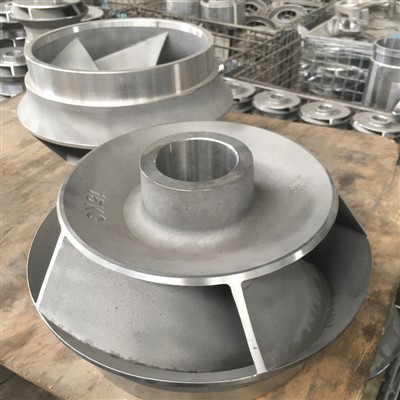
First off, let’s get one thing straight: impeller efficiency isn’t some random number we pull out of thin air to make our products look good. It’s a measure of how much of the energy you put into the fan (usually electric power) actually turns into moving air—aka “air power” if we’re being technical. The rest? That’s wasted as heat, noise, or just spinning air around uselessly inside the fan housing. Think of it like mowing your lawn: you use gas (power) to spin the mower, but if the blades are dull, half that gas just goes into vibrating the mower and blowing grass clippings sideways instead of cutting them. Same exact idea here.
Now, I know you’ve seen those efficiency numbers, usually between 50% and 90% for most standard impellers. But here’s the kicker—most of those numbers are lab-tested in perfect, zero-wind conditions, right? No ductwork losses, no dirty filters sucking up pressure, no mismatched impeller size to your fan housing. That lab number is a baseline, but real efficiency? It can drop 10, 15, even 20 percentage points if your setup is off. Last month I worked with a restaurant owner who had a old backward-curved impeller in their kitchen exhaust fan. The spec sheet said 85% efficiency, but when we tested it, their real-world number was only 62% because the duct was crumpled and clogged with grease. We swapped in a new, properly sized backward-inclined impeller and their electric bill for that fan dropped $120 a month. That’s the stuff the brochures don’t tell you.
Let’s talk about the two main impeller types because they have totally different efficiency profiles. First, forward-curved impellers—you see these in little desk fans, HVAC blowers, that kind of thing. They’re cheap to make, spin slow, and their peak efficiency is usually around 70-75%. But here’s the downside: their efficiency drops hard when you’re operating them anywhere near their maximum air flow. Push too much air, and you lose a ton of power to recirculation inside the impeller blades. Then there’s backward-curved and backward-inclined impellers—these are the workhorses for industrial fans, large HVAC systems, and ventilation for warehouses. Their peak efficiency is way higher, like 80-90% in perfect conditions. But they need to be matched exactly to your fan housing and motor. I’ve seen backward-curved impellers perform worse than forward-curved ones just because someone tried to stick a 24-inch impeller into a 20-inch housing to save a few bucks. That’s a rookie move that kills efficiency fast.
Wait, let’s not leave out mixed-flow impellers—those are the middle ground between axial (like a regular box fan) and centrifugal (the squirrel cage kind). They’re super efficient at mid-range air flows, which makes them popular for things like rooftop HVAC units. Their efficiency usually tops out around 82-85%, and they handle dusty environments better than pure backward-curved impellers, so that’s a big win for factories or construction sites where debris is a problem.
Now, what actually makes an impeller efficient? It’s not just the blade shape, though that’s huge. Blade design is a whole science—we use computational fluid dynamics (CFD) to map how air flows over each blade, making sure there’s no “separation” where the air stops moving with the blade and creates drag. Thinner blades help a little, but they have to be strong enough to spin at high speeds without breaking. The surface finish matters too—microscopic imperfections on the blade can catch air and create tiny eddies that waste power. Even the number of blades counts: too few, and you get turbulence; too many, and the blades get in each other’s way. We tested a set of impellers a few months ago where changing the blade count from 7 to 9 boosted efficiency by 3% across the entire operating range. That might not sound like a lot, but for a fan running 24/7, that’s thousands of dollars in energy savings every year.
Also, let’s talk about operating point because this is the most common mistake I see people make. An impeller isn’t efficient at all flow rates—each one has a “sweet spot” where efficiency is maxed out. If you’re running the fan at half speed or way over its designed flow, that efficiency number plummets. For example, a backward-curved impeller might hit 88% efficiency at its design flow, but at 60% flow, that drops to 72%. A lot of places try to save energy by turning fans down with dampers, but that’s like using a stop sign to slow down a car instead of letting off the gas—wastes way more power than just matching the impeller size to your actual needs. Last quarter we helped a warehouse swap their one oversized impeller for two smaller, properly sized ones that run at 50% load instead of 100% on a damper, and their total fan efficiency went up 18%.
Don’t get me wrong, efficiency isn’t everything. If you’re buying a cheap, temporary fan for a job site that only runs for a few months, a lower-efficiency forward-curved impeller might be fine because you’re not paying for it long-term. But if you’re talking about a system that runs 8,000 hours a year, over 10 years, a 5% efficiency difference is worth thousands of dollars. That’s why we always ask customers about their run time, duct size, airflow needs, and environment before we recommend an impeller—we don’t just push the highest number on the spec sheet, we push the one that works best for their setup.
Another thing a lot of people miss: efficiency decreases over time. Dirt, dust, grease buildup on impeller blades adds weight and drag, dropping efficiency by 5-10% within a year if you don’t clean them. We had a food processing plant that didn’t clean their exhaust impeller for 18 months—their efficiency dropped from 82% to 68%, and their air flow was so low they got a violation from the health department. Swapping in a new impeller and adding a quarterly cleaning schedule fixed that right away. Even corrosion in coastal areas will eat away at blade edges and mess up the aerodynamics, so that’s something to factor in if you’re located near the ocean or in a humid, corrosive environment.
So, to wrap this up, impeller efficiency isn’t a one-size-fits-all number. It’s a mix of blade design, type, matching to your system, and how you maintain it. The lab numbers are a starting point, but real-world efficiency is what actually impacts your energy bills, uptime, and operating costs.
If you’re tired of guessing if your fan impeller is running as efficient as it should, if you’re looking to upgrade and cut your utility costs, or you just have questions about impeller performance, hit me up. We can test your current setup, help you pick the right impeller for your needs, and make sure you’re not wasting money on overpriced, underperforming fans. No sales pitch, no pressure—just real answers from someone who’s been in this game for years.
Pump Impeller References:
- ASHRAE Handbook – HVAC Systems and Equipment, American Society of Heating, Refrigerating and Air-Conditioning Engineers, 2020.
- Fan Engineering: Handbook of Air, Gas, and Vapor Handling, 8th Edition, The Buffalo Forge Company, 1997.
- Fluid Mechanics and Thermodynamics of Turbomachinery, 7th Edition, S.L. Dixon and C.A. Hall, Elsevier, 2014.
- Energy Efficiency Improvement and Cost Saving Opportunities for the HVAC and R Sector, Lawrence Berkeley National Laboratory, 2018.
- Centrifugal Fan Design and Application, 2nd Edition, L. M. Timoshenko, CRC Press, 2008.
Shandong Shunye Stainless Steel Co., Ltd.
Shandong Shunye Stainless Steel Co., Ltd. is one of the most professional fan impeller manufacturers and suppliers in China, also supports customized service. Welcome to buy bulk cheap fan impeller made in China here and get quotation from our factory. For price consultation, contact us.
Address: Shandong Province, Binzhou City, Wudi County, Liubao Town, Zhangdong Road, Duliucun Village
E-mail: sales@wdshunye.com
WebSite: https://www.shunyecasting.com/
