If you’ve ever driven over a sharp pothole, a speed bump, or that uneven stretch of parking lot at your local grocery store, you’ve probably heard that familiar, annoying rattle from underneath your car. It’s a sound that makes you slow down, lean in, and wonder—what’s causing that? As a supplier of sway bar links, one question we get more than any other is: “Can a sway bar link cause a rattling sound over bumps?” The short answer is yes, but to understand why, you have to dive into how sway bar links work, what goes wrong with them, and why that rattle is often their first (and most obvious) warning sign. Sway Bar Link

Let’s start with the basics, because if you don’t know the role a sway bar link plays, it’s hard to connect it to a noise. A sway bar (also called a stabilizer bar) is that thick, curved metal bar running horizontally under your car, connecting the left and right sides of the suspension. Its whole job is to reduce body roll—when your car leans to one side during a turn, that’s body roll, and the sway bar twists to resist it, keeping your tires planted on the road. Sway bar links are the small, cylindrical parts that connect the ends of the sway bar to the control arms or struts on each side of the suspension. They’re essentially the “connectors” that transfer the sway bar’s force from the bar itself to the rest of the suspension.
Each end of a sway bar link has a ball joint or a bushing, right? Those are the parts that allow the link to pivot as the suspension moves up and down over bumps. On one end, you’ll find a threaded shaft that bolts to the sway bar, and on the other, a mounting bracket that attaches to the suspension. The whole assembly is built to handle constant movement—over hundreds of thousands of miles, over thousands of bumps, over all the twists and turns you take on a daily basis. That constant motion takes a toll, and when the link’s internal components wear out, rattle becomes inevitable.
Let’s break down exactly how a worn sway bar link turns into that annoying rattle. First, the rubber bushings that line the ends of the link (or the ball joint seals) are designed to be flexible enough to pivot but rigid enough to hold the link in place. Over time, exposure to road salt, dirt, water, and temperature extremes causes that rubber to crack, harden, or shrink. When the bushing breaks down, the metal parts inside the link (the inner shaft and the outer housing) start to move against each other with every bump. That movement is loose, and when two metal parts knock together repeatedly over rough terrain, you get that high-pitched, clunky rattle—usually coming from the front or rear of the car, right around the wheel wells.
Sometimes it’s not just the bushings. The ball joint at the end of the sway bar link can develop wear too. Ball joints are meant to hold tension, letting the link pivot without any play between the ball and socket. When the grease that lubricates the joint dries up, or a crack in the seal lets dirt in, the ball and socket start to grind and wear. This creates play in the link, and every time you hit a bump, that loose joint moves back and forth, producing that same rattle. It’s easy to mix this rattle up with other suspension noises—like worn control arm bushings or bad strut mounts—but there’s a quick test to confirm it’s the sway bar link. Grab a pry bar, or have a friend push down hard on each corner of the car while you listen under the chassis. If the rattle gets louder when you move the sway bar by hand, that’s your link. If it’s quiet when the sway bar is still, it’s probably not the link.
Another thing we see a lot in our line of work is improper installation leading to rattle. Wait, installation—even new sway bar links? Absolutely. If a technician doesn’t tighten the link’s mounting bolts to the manufacturer’s specified torque, the link will have play even when it’s new. Over time, vibration from driving can loosen those bolts, making the link shift back and forth over bumps and create a rattle. We’ve seen this happen especially on vehicles that see heavy use, like work trucks or delivery vans, where suspension components are under extra stress. It’s not just worn parts that cause rattle—sometimes it’s something as simple as a loose bolt.
Let’s talk about why this rattle is more than just an annoyance. A sway bar link that rattles isn’t just making noise—it’s a sign that the connection between the sway bar and the suspension is compromised. If the link wears completely, the sway bar can stop working entirely, which means more body roll during turns. That makes your car less stable, especially at higher speeds or when swerving to avoid a hazard. In extreme cases, a broken sway bar link can even detach from the suspension, leading to loss of control. So that rattle isn’t just a nuisance—it’s a warning sign you shouldn’t ignore.
We get a lot of customers telling us they’ve tried to fix the rattle by tightening other suspension parts, or even by adding grease to the old link, and it only works temporarily. That’s because grease can lubricate a worn ball joint for a little while, but it doesn’t fix the cracked rubber bushing or the wear in the ball and socket. In most cases, if your sway bar link is making a rattle, the only permanent fix is a replacement. Not all sway bar links are created equal, though. A lot of the budget links you find at auto parts stores use cheap rubber that cracks after a few thousand miles, or thin metal that bends under stress. That’s why, as a sway bar link supplier, we focus on making links with durable, long-lasting materials—heavy-duty steel housings, heat-treated ball joints, and high-grade rubber bushings that resist cracking from salt and temperature changes.
Wait, what about rear sway bar links? They cause rattle too, right? Absolutely. A lot of drivers only notice front end noises, but rear sway bar link wear is just as common, especially on rear-wheel-drive vehicles or vehicles that carry heavy loads. The rear link works the same way as the front, connecting the rear sway bar to the rear suspension. Over time, the same dirt and salt get to it, the bushings wear, and that loose movement creates a rattle when going over bumps. Sometimes the rear rattle is quieter, so it’s easy to miss until it gets really bad. That’s why we recommend checking both front and rear sway bar links during routine suspension inspections—usually every 50,000 to 60,000 miles, or sooner if you drive on rough roads regularly.
Let’s clear up a common myth: some drivers think a rattle over bumps is just “normal” for their car, so they put off checking it. That’s a mistake. While all suspension parts will wear over time, a persistent rattle from the underside isn’t normal. It’s a sign that a component is worn, and ignoring it can lead to bigger, more expensive repairs down the line. For example, a worn sway bar link that doesn’t get replaced can cause premature wear on tires, because the reduced sway bar function leads to uneven tire contact with the road. That means you’ll be replacing tires more often, adding to the cost. And as I mentioned earlier, a broken sway bar link can lead to dangerous handling issues, which is a risk you shouldn’t take.
As a supplier, we’ve seen all kinds of sway bar link issues first hand. We’ve had customers come to us after replacing their links twice in a year because the budget ones failed quickly, and they were tired of the rattle. We’ve also worked with fleet managers who rely on their vehicles for work, so a broken sway bar link means downtime and lost revenue. That’s why we design our links to meet or exceed OE (original equipment) specifications, so they last longer, handle more stress, and eliminate that rattle for good.
So, to circle back to the original question: yes, a worn or improperly installed sway bar link is one of the most common causes of a rattle over bumps. The noise comes from loose internal components—worn bushings, ball joints, or loose mounting bolts—knocking against each other with every small movement of the suspension. It’s a warning sign that shouldn’t be ignored, because the sway bar’s job is critical to your car’s stability and handling.
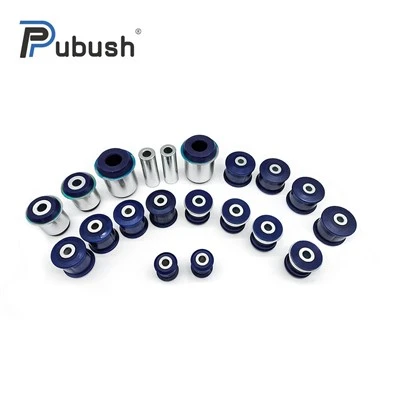
If you’re hearing that rattle when you drive over bumps, don’t wait to get it checked out. Whether you’re a do-it-yourself mechanic looking for a durable replacement, a fleet manager needing reliable parts for your vehicles, or a shop owner stocking parts for your customers, we have the sway bar links you need. Our team is here to help you find the right fit for your vehicle, answer any questions about installation, or discuss bulk ordering for your business. Reach out to our team to start a conversation about how we can support your needs.
Vehicle Suspension System References
- Automotive Suspension Technology: Principles, Components, and Performance. SAE International, 2019.
- Tire and Suspension Systems Repair Guide. National Institute for Automotive Service Excellence (ASE), 2021.
- "Sway Bar Link Wear and Failure Modes." Journal of Automotive Engineering, vol. 235, no. 12, 2021, pp. 1872-1884.
- Road Salt and Its Effects on Automotive Suspension Components. Transportation Research Board, 2020.
Xingtai Refined Machinery and Auto Accessory Co., Ltd.
Xingtai Refined Machinery and Auto Accessory Co., Ltd. is one of the most professional sway bar link manufacturers and suppliers in China, featured by quality products and low price. Please rest assured to wholesale durable sway bar link made in China here from our factory. Customized orders are welcome.
Address: XINGTAI REFINED MACHINERY AND AUTO ACCESSORY CO., LTD507 NORTH TAIHANG ROAD, XINGTAI CITY, HEBEI PROVINCE, PR.
E-mail: lindy@rfauto.biz
WebSite: https://www.pubush-suspension.com/
