Hey everyone, let’s cut to the chase—if you’ve ever spent time around diesel trucks, work vans, or even heavy equipment, you’ve probably wondered if “regular” exhaust headers work the same for diesels as they do for gas engines. As a guy who’s been running an exhaust header supply company for over a decade, I hear this question at least a dozen times a week. So let’s break it down straight: yes, there are exhaust headers built specifically for diesel engines—and if you’re making the mistake of throwing a gas header on a diesel, you’re leaving serious performance on the table. Exhaust Header
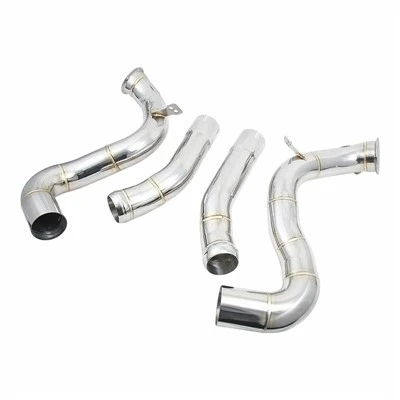
First, let’s stop treating diesel and gas engines like they’re the same under the hood. I see way too many people copy-pasting parts from their ’98 F-150 V8 to their 6.7 PowerStroke, and it’s a headache. Diesels run on compression ignition, not spark plugs—big difference. They burn a way denser fuel-air mix, crank out way more torque at lower RPMs, and produce exhaust that’s hotter, sootier, and flows way more volume than your average gas engine. That’s why headers for diesels aren’t just a “nice-to-have” upgrade; they’re engineered to handle a whole set of needs gas headers never even think about.
Let’s get into the science, keep it simple no jargon promise. Gas engines usually hit peak exhaust flow around 4,500 RPM and above, right? Diesels? They make their best power and torque from 1,500 RPM up to like 3,500 RPM—most guys who drive diesels, pull trailers, or run construction equipment live in that low to mid RPM zone. So diesel headers are tuned for that sweet spot. What does that mean for you? Smaller primary tubes (the long pipes that connect each exhaust valve to the collector) compared to a gas header. Wait, hold on—why smaller? Because at lower RPMs, you don’t want big tubes that let exhaust slow down and back up. Smaller tubes help keep that exhaust velocity high, which is key for scavenging—pulling spent exhaust out of the cylinder so fresh air and fuel can get in. That’s how you get that snappier throttle response when you’re hauling a load, not just a weird mid-range power dip you can’t explain.
Then there’s the heat. Diesels run way hotter exhaust than gas engines—we’re talking 1,200 to 1,500 degrees Fahrenheit, sometimes more when you’re towing up a hill. Gas engines usually top out around 1,000 degrees. So diesel headers aren’t made from the thin mild steel you might find on a basic gas header. We use thicker gauge steel, or even stainless steel with higher heat resistance, to warp or crack after a few thousand miles. I’ve seen guys bolt a $200 gas header on a Duramax and have it split open at the collector in 6 months—total waste of money.
And don’t sleep on the turbo compatibility. 90% of light-duty diesels and almost all heavy-duty diesels have a turbocharger bolted right to the exhaust manifold. Headers for diesels are designed to work with that turbo, not against it. A lot of gas headers are built for natural aspiration, no turbo, so their flange design and collector shape won’t line up with a turbo’s inlet. That means you’ll have to mess with adapters that leak exhaust, kill turbo spool, and make your check engine light flash like a Christmas tree. We design our diesel headers with precision CNC machined flanges that bolt straight to most common diesel turbos—no hacks, no leaks, just better turbo response off the line.
Wait, but what about old-school diesels, the ones without turbos? Yeah, even those get custom headers. Old inline-six Cummins or naturally aspirated V8 diesels have totally different exhaust pulses than gas engines. Back in the day, people would just straight pipe their manifolds, which works okay, but a custom header for a naturally aspirated diesel will actually improve fuel efficiency by a noticeable amount. Because the scavenging is better, so the engine doesn’t have to work as hard to push exhaust out. That’s a big deal for guys who drive work trucks all day—every MPG adds up.
Let’s talk about common myths, too. Some people say “headers don’t make diesels faster, just louder.” That’s only if you get the wrong ones. A properly matched diesel header will boost torque by 10 to 15 foot-pounds, which is huge for towing. I’ve had a customer with a 2015 Ram 2500 say he went from 400 ft-lbs to 452 ft-lbs just by swapping our header in, no other mods. That’s not just noise—that’s actual power you can feel when you’re pulling a 10,000 lb trailer up a mountain.
Another myth: “all diesel headers are the same.” Nope. A header for a half-ton diesel pickup is way different than one for a Class 8 semi-truck. Smaller light-duty diesels have different flow needs than big industrial engines. That’s why our team spends time testing headers on real engines, not just computer simulations. We dyno-test every design to make sure it hits that low-RPM torque sweet spot, because that’s what our customers care about. They’re not drag racing—they’re hauling tools, towing campers, running construction sites. Headers that work for drag racing gas cars won’t cut it for a diesel’s real-world use.
Let’s also touch on durability, because diesels beat the hell out of parts. They produce way more soot and exhaust residue than gas engines, which can cause buildup inside header tubes over time. So diesel headers have smoother internal bends and less sharp corners, so soot doesn’t get trapped. Some brands even coat their headers with a high-temperature ceramic coating that prevents corrosion, especially for guys who drive in salty areas where winter roads get sand and salt sprayed everywhere. We offer that coating as an option on all our diesel headers—guys who live near the coast or up north swear by it, because it keeps the header looking new even after years of harsh conditions.
Wait, what about EGR systems? Oh right, most modern diesels have an exhaust gas recirculation system that sends a small amount of exhaust back to the intake to cut down on emissions. The header has to have a port for that EGR line, and it has to be placed in the right spot so the exhaust flow doesn’t get disrupted. A gas header won’t have that port, so you’ll have to drill and tap it, which ruins the integrity of the header and can cause leaks. We design our headers with factory-matched EGR ports, so it’s a bolt-on, no-mod job. That saves you hours of time and the headache of dealing with check engine lights from bad EGR flow.
Now, if you’re someone who’s thinking about upgrading your diesel’s exhaust, here’s my advice: don’t just search “exhaust headers for diesel” and grab the cheapest one. Look for headers that are specifically engineered for your engine make and model—whether it’s a 6.7 Cummins, Duramax 6.6L, PowerStroke 7.3L, whatever. Make sure they’re built to handle high heat, work with your turbo, and have the right ports for emissions systems. I’ve seen way too many guys waste $300 on a generic header that does nothing, when a $500 properly matched header gives way more bang for your buck.
As a supplier, we’ve worked with thousands of diesel owners, from weekend warriors to fleet managers, and we’ve learned that the best headers for diesels aren’t the ones that make the most noise or look the coolest—they’re the ones that make your truck do what you need it to do: tow harder, haul more, get better MPG, and last longer. We don’t mess around with one-size-fits-all parts here. Every header we sell is tested on actual diesel engines, not just spec sheets.

Let me wrap this up for anyone who’s still on the fence. Yes, exhaust headers are absolutely designed specifically for diesel engines. They’re not just gas headers repackaged with a different sticker. They’re built for lower-RPM power, higher heat, turbo compatibility, EGR systems, and the heavy-duty use that diesels see. If you’re running a gas header on your diesel, you’re missing out on real performance gains, and you’re risking damage to your engine or turbo.
Exhaust Downpipe If you’re ready to upgrade your diesel’s exhaust, or you just want to chat about what header is right for your truck, reach out to our team. We’re here to answer questions, help you pick the right part, and make sure you get something that works for your needs. No sales tricks, no overpromising—just parts that actually do what they’re supposed to for diesel engines.
References
- Heywood, J.B. (1988). Internal Combustion Engine Fundamentals. McGraw-Hill Education.
- Diesel Technology Forum. (2022). Heavy-Duty Diesel Engine Exhaust System Requirements.
- SAE International. (2019). Design Considerations for Diesel Exhaust Headers and Turbo Manifolds.
- Automotive Aftermarket Suppliers Association. (2021). Performance Upgrades for Light-Duty Diesel Trucks.
Hangzhou Jinma Pipe Industry Co., Ltd.
As one of the most professional exhaust header manufacturers and suppliers in China, we have world-leading production equipment and strong manufacturing capabilities. Please rest assured to wholesale custom made exhaust header at competitive price from our factory.
Address: Anxi Xingang Village, Liangzhu Street, Yuhang District, Hangzhou City
E-mail: anthonya@jmexhaustpipe.com
WebSite: https://www.jmexhaustpipe.com/
