If you’ve ever worked with high-performance components for aerospace, medical implants, semiconductor manufacturing, or corrosive chemical processing, odds are you’ve interacted with tantalum products—even if you didn’t realize it. As a supplier of tantalum-based parts, I spend a lot of time talking to engineers, procurement managers, and R&D teams who initially know tantalum is durable, but get stumped when they need to dive into its specific chemical properties to select the right material for their application. I’ve lost count of how many times someone has asked, “Why is tantalum so much better than stainless steel or titanium for this use case?” The answer always circles back to its one-of-a-kind chemical behavior. Today, I want to break down the core chemical properties of tantalum products, explain why they matter for real-world use, and tie this directly to how our team at [Supplier Redacted] designs and tests every part we ship. Tantalum Products
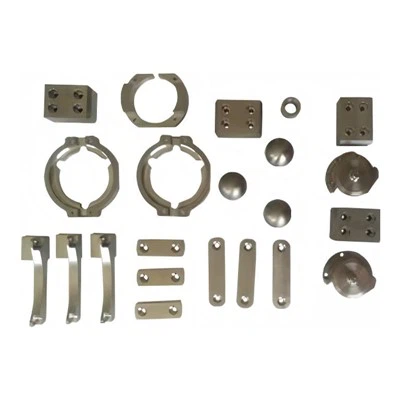
First, let’s start with the basics to ground this: tantalum is a rare transition metal, atomic number 73 on the periodic table. It’s dense, ductile, and has a high melting point (around 2,996°C, second only to tungsten among pure metals), but its chemical traits are what set it apart from most common structural metals. The most famous chemical property of tantalum is its extreme resistance to corrosion, but it’s not just “resistant”—it’s a active, controlled resistance that makes it unique. Here’s how it works: when tantalum is exposed to oxygen (even in tiny amounts, like in room-temperature air), it forms an ultra-thin, hermetic layer of tantalum pentoxide (Ta₂O₅) on its surface. This layer is only 1 to 5 nanometers thick—literally 100,000 times thinner than a human hair—but it’s incredibly stable. Unlike the rust that forms on iron or the oxide layer that flakes off aluminum, this Ta₂O₅ passivation layer is self-healing. If you scratch a tantalum part, the exposed tantalum instantly reacts with surrounding oxygen (even in liquids or humid environments) to regrow the protective layer in seconds. That’s a game-changer for parts that will be exposed to harsh chemicals for years on end.
But how does this hold up against actual corrosive substances? I’ve tested tantalum samples myself in our in-house lab, alongside customers who run their own third-party corrosion tests. The data is consistent: at room temperature, tantalum is virtually unaffected by almost all inorganic acids, organic acids, and bases except for two: hydrofluoric acid (HF) and hot, concentrated sulfuric acid. Wait—let’s qualify that. It’s not that tantalum reacts with all hot sulfuric acid, just concentrated (90%+) at temperatures above 150°C. Dilute sulfuric acid, even when heated to boiling, has almost no effect on tantalum. For reference, stainless steel will dissolve in concentrated sulfuric acid at 60°C, and titanium will corrode at 90°C. When we supply tantalum heat exchangers for chemical plants processing phosphoric acid, acetic acid, or nitric acid, that stability means the parts last 10 to 20 years, compared to 2 to 3 years for standard alloys. I once had a customer in the specialty fertilizer industry switch from Hastelloy to our tantalum lined reactors, and they reported that their annual maintenance costs dropped by 70% because they no longer had to replace corroded vessels every 12 months.
Another key chemical property of tantalum products is their biocompatibility, which comes from that same stable Ta₂O₅ layer. Medical device engineers often ask why titanium is so common for implants, and why tantalum is a better choice for some applications. The answer is how the body interacts with both materials. The Ta₂O₅ layer is non-reactive with biological fluids, so it doesn’t trigger inflammatory responses or immune rejection. Titanium’s oxide layer works for most implants, but it can slowly release metal ions over time, especially in high-stress environments like hip replacements. Tantalum, on the other hand, has been used for years in pacemaker components, surgical instruments, and even cranial implants because it integrates with bone tissue seamlessly—no ion leaching, no adverse reactions. We supply tantalum electrodes for neurostimulators, and our quality team tests every batch to ensure the tantalum meets ASTM F563 standards for medical-grade tantalum; that’s a standard specifically written for its biocompatibility and chemical purity, a requirement that’s non-negotiable for medical applications.
Wait, let’s not skip over two other chemical properties that are critical for high-tech industries: tantalum’s high dielectric constant and its ability to resist hydrogen embrittlement. The dielectric constant of Ta₂O₅ is around 25, which is much higher than the silicon dioxide used in most semiconductors, and even higher than titanium dioxide. That makes tantalum an ideal material for capacitors—specifically, the tantalum capacitors that power everything from smartphones to satellite communications equipment. The chemical stability here is just as important as the dielectric property: over time, the tantalum anode and Ta₂O₅ dielectric layer don’t degrade, so the capacitors have a long lifespan. We’ve supplied tantalum anodes for aerospace-grade capacitors that are expected to last 15 years in orbit, where radiation and extreme temperature fluctuations would break down other materials. That’s only possible because the core tantalum material doesn’t undergo any unwanted chemical reactions in the vacuum of space or exposure to cosmic rays.
Then there’s hydrogen embrittlement, a problem that plagues many metals used in hydrogen storage or processing. When metals absorb hydrogen gas, the hydrogen atoms penetrate the crystal structure, making the material brittle and prone to cracking. Tantalum is almost uniquely resistant to this, especially when compared to common alternatives like steel or nickel alloys. Let’s be clear: tantalum does absorb hydrogen, but only at very high temperatures (above 300°C) and very high hydrogen pressures, and even then, it only absorbs a small amount that doesn’t cause embrittlement. For hydrogen fuel cell manufacturers or companies processing hydrogen at scale, that means tantalum valves, pipes, and storage vessels won’t fail suddenly like stainless steel or aluminum parts can. We recently worked with a hydrogen production startup that was having issues with their nickel alloy pipes cracking after 6 months of use; switching to our seamless tantalum pipes fixed the problem, and they’ve since placed repeat orders for new pilot-scale facilities.
Now, I want to address a common misconception I hear all the time: tantalum is just an expensive “premium” metal, and you should only use it for niche applications. While it’s true that tantalum is rarer than steel or aluminum, and our raw material comes from carefully sourced, conflict-free mines (we only work with suppliers that follow the OECD’s Due Diligence Guidance for Responsible Supply Chains of Minerals from Conflict-Affected and High-Risk Areas—something that’s non-negotiable for our business), the total cost of ownership of tantalum products is often lower than cheaper alloys. Let’s do a quick example: a stainless steel reactor might cost $5,000 upfront, but need to be replaced every 2 years, so over 10 years that’s $25,000. A tantalum reactor might cost $18,000 upfront, but last 15 years, so over 10 years that’s only $18,000—plus you avoid the downtime and labor costs of replacing the part every 2 years. That’s the value of understanding tantalum’s chemical properties; it’s not about cost, it’s about performance and reliability.
I also want to be transparent about the limits of tantalum, because no material is perfect. As I mentioned earlier, hydrofluoric acid is a big one. Tantalum will react with HF at almost any temperature, even at very low concentrations, because fluoride ions break down the Ta₂O₅ layer. Hot, concentrated alkalis like sodium hydroxide (NaOH) at temperatures above 100°C will also corrode tantalum over time. For these applications, we recommend alternative materials like zirconium or Hastelloy C-276, and our team is always happy to help customers select the right material based on their specific operating conditions. We don’t just sell tantalum parts—we provide chemical compatibility testing and application advice to make sure customers get exactly what they need, no overpaying for a material that won’t work.
Let’s circle back to why I’m sharing this today. As a supplier of tantalum products, I’ve seen first-hand how a misunderstanding of its chemical properties can lead to costly mistakes for customers. A few years ago, we had a customer who tried to use tantalum lined pipes for a project that involved trace amounts of HF, and the pipes corroded within a few months. We worked with them to redesign the system using zirconium lining instead, and they avoided a shutdown that would have cost them over $100,000 in lost production. That’s why we invest so much time in educating customers about tantalum’s chemical traits—not just selling them a product. Every part we make, from tantalum wire for lab equipment to large lined reactors for chemical processing, is tested in our lab to ensure it meets chemical compatibility requirements. We test for corrosion resistance in acids, bases, and organic solvents; we test for biocompatibility for medical parts; we test for dielectric stability for semiconductors; and we test for hydrogen resistance for energy applications.
If you’re an engineer designing a new component, a procurement manager looking to reduce maintenance costs, or someone just learning about tantalum and its unique properties, I encourage you to reach out to our team. We can share detailed chemical compatibility data sheets for any of our products, run custom lab tests for your specific operating conditions, and help you determine if tantalum is the right material for your application. Whether you need a small tantalum electrode for a research lab or a large reactor for a global chemical plant, we have the expertise to deliver a high-quality, reliable product that meets your needs.

Don’t let the complexity of tantalum’s chemical properties intimidate you. When you understand how it behaves in different environments, it’s clear why it’s become a go-to material for some of the most demanding industries in the world. From life-saving medical implants to life-sustaining chemical processing to cutting-edge semiconductor technology, tantalum’s unique chemical properties make it irreplaceable for so many applications. If you’re ready to discuss how tantalum can improve your next project, we’re here to help. Reach out to our team today to start a conversation about your requirements.
Tungsten Wire References:
ASTM F563-21, Standard Specification for Wrought Tantalum for Surgical Implants
Uhlig’s Corrosion Handbook, 3rd Edition, John Wiley & Sons, 2011
Periodic Table of Elements, IUPAC, 2024
Tantalum for Electronic Applications, European Tantalum, Niobium, and Rare Earths Association (ETNRA), 2022
Biocompatibility of Metals for Implants, Journal of Biomedical Materials Research, Volume 108, Issue 4, 2020
Address: Wangjing Science and Technology Park, Guangshun North Street, Chaoyang District, Beijing
E-mail: sales@moly-tungsten.com
WebSite: https://www.moly-tungsten.com/
