Hey everyone, if you’re deep in the supply chain space for industrial fasteners, you’ve definitely heard of Leaf Chain—those thin, interlocking metal links that handle everything from forklift lifting systems to airport baggage conveyor belts. I’ve been a supplier for Leaf Chain for almost 7 years now, so I’ve seen the good, the bad, and the ugly when it comes to scaling cross-chain integration (wait, no, not that cross-chain—wait, let me clarify fast: this is cross-chain as in integrating different parts of the industrial supply chain, not crypto. Phew, I almost mixed up the jargon that new folks love to throw around). A lot of people think being a Leaf Chain supplier is just stamping out links and shipping them—but lately, the biggest pain point I’m dealing with isn’t making the chain itself. It’s tying together all the different moving parts of the supply chain to get Leaf Chain where it needs to go, when it needs to go, without losing our minds over delays. Leaf Chain
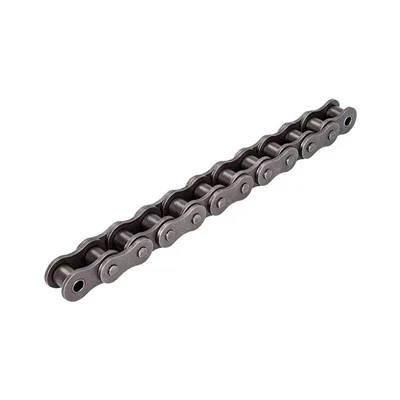
Let me set the scene: A client just hit us up last month. They make industrial forklifts, and they needed 12,000 custom Leaf Chain links for a new line of heavy-duty warehouse lifts. The problem? They had their own inventory system (built on that old ERP from 2018 that still uses Excel backups), their logistics team worked with three different third-party carriers, and our order management system for Leaf Chain is a standalone tool we use for production scheduling. We spent 3 weeks just syncing their order, checking our stock, and figuring out who was gonna ship it—all because their systems didn’t talk to ours, and the carriers’ tracking tools didn’t feed into either of our dashboards. That’s just the start of the cross-chain chaos, honestly.
First up, the biggest challenge we face as a Leaf Chain supplier: legacy system silos across the whole value chain. Let’s break this down. A Leaf Chain isn’t just a part—it’s part of a whole ecosystem. Raw steel for the links comes from a mill in Pittsburgh, the heat treatment we do to make the chain durable is done at our in-house shop, then we send it to coating specialists in Ohio to stop rust, then it goes to the forklift manufacturer, then to distributors who sell to repair shops. Each of these players has their own system. The steel mill uses an old mainframe that only sends purchase orders via fax sometimes (yes, fax), the heat treatment team uses a cloud tool that doesn’t integrate with our order platform, and the forklift client uses that 2018 ERP I mentioned. Trying to sync all that for cross-chain integration? It’s like herding cats, and the cats are all using different apps. For example, last quarter, a 2-week delay at the steel mill meant we had to push back three orders, but we didn’t find out about it until we followed up via phone because the mill’s system couldn’t auto-update our stock. We lost a small client because of that—they couldn’t wait, so they went to a competitor that had a more integrated supply chain. That’s the stuff that keeps me up at night.
Second challenge: standardized data protocols. Everyone talks about “open data” and “interoperability,” but in real life, every single part of the Leaf Chain supply chain uses different data formats. Let’s say we need to share the spec for a custom Leaf Chain—like how thick each link is, what grade of steel, the load capacity. Our system calls it “Link Thickness (mm),” the forklift client’s ERP calls it “Part Dimension 2,” the steel mill’s mainframe calls it “Metal Gauge,” and the coating shop uses a free-text field for “part size.” So when we send a spec, half the time the other end misreads it, or it takes an hour for someone to translate it manually. For cross-chain integration to work, we all need to speak the same data language. But here’s the catch: small suppliers like us, and even big clients, don’t have the budget to overhaul our systems overnight. We’re not a tech giant—we’re a 25-person shop that makes Leaf Chain, not builds software. We can’t drop $500k on a new ERP just to sync data with a couple of clients. That’s a hard stop for a lot of us in the industrial space. I’ve seen mid-sized clients try to build custom bridges between systems, and it ends up costing more than just dealing with manual data entry half the time.
Third challenge: visibility end-to-end. If you’re a Leaf Chain supplier, you care about where your links are at every step. But cross-chain integration isn’t just about tracking a package—it’s about tracking the entire chain of materials and processes. Let’s say we ship Leaf Chain to a distributor. The distributor sells 100 links to a repair shop in Chicago, 200 to a forklift plant in Detroit, and keeps 500 in stock. We get a shipment confirmation from the distributor, but we have no clue what happens to those links after that. If a repair shop calls saying a batch of Leaf Chain is failing, we can’t trace that batch back to the steel mill’s heat treatment process, or the coating lot, because we lost sight of it once it left our loading dock. Last year, we had a recall on 800 Leaf Chain links because a batch of steel was too soft. We spent 6 weeks tracking every single batch by hand, cross-referencing paper records, and calling every distributor and repair shop we’d shipped to. If we had proper cross-chain visibility, that would have taken 2 days. The worst part? We still missed 12 links that ended up in a repair shop that went out of business before we could reach them. That’s a liability nightmare, right there. And it’s not just recalls—clients need real-time updates too. If a forklift plant is on a tight production schedule, they need to know if their Leaf Chain is at the coating shop, or in transit, not wait for a weekly email that’s outdated by 5 days.
Wait, let’s talk about a fourth one that’s specific to Leaf Chain, not just any industrial part. Leaf Chain has super strict performance specs—load capacity, fatigue resistance, corrosion protection. So when we integrate cross-chain, we don’t just need to track location, we need to track quality metrics at every step. The heat treatment shop has to log the temperature they used, the coating shop has to log the thickness of the zinc layer, the steel mill has to log the carbon content of the raw material. If those quality logs are siloed, we can’t prove to a client that our Leaf Chain meets their ISO standards, or trace a quality issue back to its source. A lot of small clients (like small warehouse operators) don’t have in-house quality teams, so they rely on our data. If our cross-chain system can’t share that quality data seamlessly, we lose their trust. I had a small repair shop client switch to a competitor last year because they couldn’t get a digital copy of the quality certificate for a Leaf Chain order they needed to submit to their own client, a local delivery company. They were waiting 3 days for a paper certificate, which held up their order, so they bailed. That stings because we’ve worked with them for 4 years.
Now, before you think I’m just here to complain—there are solutions, right? I’ve tested a few things over the last year. We started using a simple cloud-based tool that acts as a middleman between our old system and our client’s ERP, using basic API integrations that didn’t require us to redo our whole setup. It’s not perfect—sometimes it glitches, and we still have to manually check orders, but it’s cut down order time by 40%. We also joined a small industrial supply chain consortium of Leaf Chain suppliers and clients, where we all agreed on basic data formats for specs and order info. That helped a lot with the steel mill—they started using a simple digital form that matches our spec format, instead of sending faxes. The only problem with that consortium is that it’s only local, and we work with clients all over the country, so scaling that is hard.
Another thing: a lot of people talk about blockchain for supply chain, and yeah, I’ve dabbled with a tiny blockchain pilot to track Leaf Chain batches. It’s cool—each batch gets a unique code, and every step (raw material, heat treatment, coating, shipping) is logged to the chain. But for small suppliers like us, the cost of setting up and maintaining a blockchain network is way too high. We can’t afford a dedicated tech team to manage it, and our clients don’t want to pay a premium for a pilot that’s still in testing. It’s a nice idea, but not practical for most of us in the Leaf Chain supply chain.
So what’s the takeaway here? Cross-chain integration for Leaf Chain isn’t just a tech problem—it’s a people and money problem too. The big players can afford to overhaul their systems, but mid-sized suppliers, small mills, and small clients can’t. Standardizing data protocols, building simple, low-cost integration tools, and prioritizing end-to-end visibility for quality as much as location—those are the things that will actually move the needle, not fancy blockchain tools that no one can afford.

If you’re someone who needs reliable Leaf Chain, whether you’re a forklift manufacturer, a repair shop, or a warehouse operator, trust me when I say that fixing these cross-chain challenges will make everything smoother. We’re always looking to work with partners to streamline our supply chain, so we can get you the Leaf Chain you need, on time, every time. If you’re interested in partnering, let’s connect to talk through your needs and see how we can make this work together.
Chain References
- Industrial Supply Chain Association. (2023). Interoperability Challenges in Mid-Sized Manufacturing and Distribution Networks.
- Leaf Chain Technical Standards Board. (2022). Quality Tracking Protocols for Thin-Link Industrial Chains.
- U.S. Small Business Administration. (2023). Technology Adoption Costs for Small Industrial Suppliers.
Anhui Huihuang Chain Transmission Co., Ltd.
Anhui Huihuang Chain Transmission Co., Ltd. is one of the most professional leaf chain manufacturers and suppliers in China, also supports high quality customized service. Please feel free to buy discount leaf chain made in China here from our factory. Welcome to contact us for pricelist and free sample.
Address: NO.3 YONGQIANG ROAD. JIXI.ANHUI.CHINA
E-mail: 754590660@qq.com
WebSite: https://www.hhchains.com/
