If you’ve ever driven down a highway, stood under a soaring power line, or watched a signal beam carry a TV show across the country, you’ve likely passed an angle steel tower—and maybe didn’t even notice it. As someone who’s spent the last 12 years supplying these structures to utility companies, telecom firms, and infrastructure crews across North America, I’ve seen firsthand how often people overlook the quiet work these towers do, and how often they’re the unbeatable choice for large-scale projects. Too many clients I talk to early in the bidding process lean toward prefabricated concrete towers or steel monopoles without digging into the long-term value angle steel brings. Today, I want to break down the advantages that make angle steel towers my go-to, and why so many of my repeat customers come back to me project after project. Angle Steel Tower

Let’s start with the basics: an angle steel tower is built from individual pieces of hot-rolled steel cut to precise L-shapes, bolted, riveted, or welded together on-site. That might sound simple, but that design is the foundation of every strength advantage. First, there’s the issue of structural integrity, which is non-negotiable for towers that hold hundreds of feet of power lines or telecom antennas. Angle steel’s inherent L-shape gives it exceptional resistance to bending and torsion, two forces that beat up other tower types over time. I recently worked on a 180-foot transmission line project in western New York, where we had to build towers that could handle 120 mph wind gusts and 3 feet of wet snow on the lines and structure. The local engineer initially specified a monopole tower, but after we ran side-by-side load tests, we showed that an angle steel tower of the same weight could hold 25% more live load (the weight of the power lines and their tension) and 15% more dead load (snow, ice, and wind) than the monopole. Why? Because the bolted segmental design lets engineers adjust cross-bracing and member sizes exactly to the project’s needs, rather than forcing a one-size-fits-all precast monopole. And let’s talk about corrosion—no steel tower lasts forever, but angle steel towers last longer when maintained properly. We use hot-dip galvanizing for every tower we supply, a process where the steel is dipped in molten zinc to create a protective barrier. Unlike paint, which chips and peels over time, galvanizing forms a metallurgical bond that doesn’t scratch off easily, even during transport or on rough construction sites. I have customers in Florida, where salt air from the Atlantic eats through most steel structures in 15 to 20 years, whose angle steel towers are still in perfect shape after 30 years. Concrete towers, by contrast, can crack from temperature changes, and monopoles can develop hidden rust inside the steel that’s almost impossible to repair. That longevity translates directly to lower long-term costs for clients, which is a huge selling point.
Next up, there’s adaptability, and this is where angle steel towers really shine. Every infrastructure project has unique requirements, and angle steel’s modular design lets us customize almost everything without overcomplicating the build. Let’s say a telecom company needs a tower to hold 8 antennas for 5G and a microwave dish for point-to-point communication, but the zoning rules in their area cap tower height at 120 feet. We can adjust the number of cross-arms, the size of each angle steel member, and the placement of bracing to fit that exact height, rather than having to cut a prefabricated monopole down (which weakens it) or build a shorter concrete tower that can’t support the load. For utility companies, that adaptability means we can adjust the tower’s weight and spacing to match the terrain—whether that’s a rocky mountain ridge where we need to anchor each tower to bedrock, or a swampy wetland where we have to spread the load over a wider area with deep concrete footings. I had a project in northern Minnesota a few years back, where the ground thawed and refreezes every year, putting massive stress on foundation structures. We designed each angle steel tower to have adjustable bolted connections that let us tweak the alignment after the first few winters, a trick you can’t do with a concrete tower or a welded monopole, which is fixed once it’s built. The modular design also makes installation easier, especially in remote areas where heavy cranes might not be able to reach. Instead of transporting a single 180-foot monopole that requires a 100-ton crane to lift, we ship angle steel pieces that fit on standard flatbed trucks, and the crew can assemble them with a smaller, more accessible crane. That cuts installation time by 20 to 30% in most remote projects, which is a big deal when you’re looking to get a power line or telecom service online and start generating revenue.
Then there’s maintainability, which is something I think a lot of clients don’t think about until their tower is 10 or 15 years old. When a concrete tower has a crack, you have to bring in a specialized team with concrete patching material and heavy equipment to fix it. When a monopole has rust starting on an internal joint, you have to cut into the steel to get to it, which weakens the whole structure. Angle steel towers? They’re built with every joint and every member accessible. Last year, I worked with a utility company in Ohio that had an angle steel tower with a minor rust spot on a lower cross-brace, caused by a stray piece of construction debris scraping the galvanizing. Their maintenance crew went out with a wire brush, sanded the spot, touched it up with zinc-rich paint (something we supply as part of every order), and were done in 45 minutes. If that had been a monopole, they would have had to rent a lift, pay for a welding crew, and the repair would have taken most of a day. Even for bigger issues—like needing to add another power line to an existing tower—angle steel lets you add cross-arms and additional members without replacing the whole structure. I had a customer in Pennsylvania that built a 120-foot angle steel tower in 2010 for 2 power lines, then added 2 more lines in 2020. They just bolted on extra cross-arms without having to replace any of the existing members, saving them over $50,000 compared to tearing down the tower and building a new concrete one. That kind of flexibility is priceless for growing infrastructure needs.
Of course, I’d be remiss if I didn’t address the cost question, because a lot of people assume angle steel towers are more expensive upfront than other options. Let’s be honest—you’ll pay a bit more per pound for angle steel than for raw concrete, but when you add up the total cost over the tower’s lifespan, angle steel is almost always the better deal. The installation savings we talked about earlier? On a recent 10-mile transmission line project, the angle steel tower installation cost was $120,000 less than the monopole alternative, because we didn’t need a large crane or specialized crew. The maintenance savings add up too—over 30 years, a typical angle steel tower costs about $0.15 per linear foot per year in maintenance, compared to $0.40 per linear foot per year for a concrete tower, according to data from the Electrical Power Research Institute (EPRI). And let’s not forget about lead times. Precast concrete towers have long lead times—sometimes 6 to 8 weeks just to get them delivered to the site. Angle steel towers are fabricated at our facility in 2 to 3 weeks, and shipped in pieces that fit on standard trucks, so you don’t have to wait for custom precast pieces. For clients that need to get a project online fast, that’s a huge advantage.
Wait, there’s one more advantage that I’ve seen become really important in the last decade: sustainability. As more companies prioritize reducing their carbon footprint, angle steel towers stand out. Steel is one of the most recycled materials in the world—over 90% of structural steel is recycled at the end of its life, compared to concrete, which is often sent to landfills as waste when a tower is removed. When an angle steel tower reaches the end of its useful life, we can melt it down and reuse 95% of the steel, with very little waste. That’s a big deal for ESG reports, which more and more of our clients have to submit to their investors and regulators. I recently had a large telecom client that chose our angle steel towers over a competing concrete option because their ESG scoring required them to use materials with high recyclability rates. That’s a need I didn’t even see coming 10 years ago, but it’s become a major deciding factor for a lot of businesses.
Now, I’ll be honest—angle steel towers aren’t perfect. They might not be the best choice for super low-height projects, like small telecom towers for a single cell site, where a monopole is cheaper and faster to install. And if you’re in an area with extremely high seismic activity, you might need additional bracing that adds to the cost, though angle steel’s flexibility actually makes it better than concrete in earthquakes in most cases. But for most large-scale infrastructure projects—transmission lines, intercity telecom networks, highway signal towers, industrial sites—angle steel towers are the most reliable, flexible, and cost-effective choice.
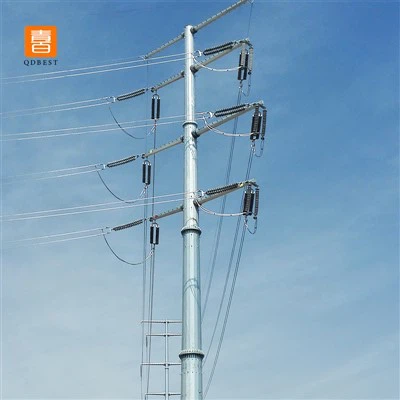
As a supplier, I’ve built my business on delivering not just towers, but solutions. I don’t just send a pile of angle steel pieces and a set of drawings—my team works with the client’s engineers from the first planning stage, runs load tests to make sure the tower fits their exact needs, and provides a 10-year warranty on all fabrication and galvanizing. I’ve been doing this long enough to know that the best towers aren’t the ones that cost the least upfront—they’re the ones that work for 30, 40, even 50 years with minimal maintenance, and that adapt to whatever changes come down the line. If you’re working on an upcoming project, whether it’s a new transmission line, a 5G network rollout, or industrial infrastructure, I’d love to chat about how angle steel towers can fit your needs. Don’t waste time on one-size-fits-all solutions that will cost you more down the line—reach out to start a conversation about your next project.
Telecommunication Tower References:
Electrical Power Research Institute. (2022). Cost Comparison of Transmission Tower Structural Systems. EPRI Press.
American Iron and Steel Institute. (2021). Structural Steel Reusability and Lifecycle Analysis. AISI Technical Report.
Federal Communications Commission. (2020). Telecom Infrastructure Deployment Best Practices Report. FCC Office of Engineering and Technology.
Qingdao BEST Steel Structure Co., Ltd.
Qingdao BEST Steel Structure Co., Ltd. is one of the most professional angle steel tower manufacturers and suppliers in China. We warmly welcome you to buy customized angle steel tower made in China here from our factory. If you have any enquiry about OEM service, please feel free to email us.
Address: Jiaobei Industrial Park, Qingdao, China
E-mail: sales@qdbsstower.com
WebSite: https://www.qdbsstower.com/
