If you’ve ever walked into a modern co-working space, a tech startup office, or even a sleek executive suite, you’ve probably noticed smart office cabinets blending into the background—quietly holding everything from laptops and meeting room AV equipment to staff lockers and confidential documents—while also doing far more than a basic wooden credenza could ever dream of. As a supplier who’s worked with over 200 businesses across North America and Europe to choose and install these cabinets, one question pops up in almost every first conversation: “What’s the actual price gap between basic smart office cabinets and the advanced ones?” It’s not a simple answer, because the difference isn’t just in the hardware or the sticker tag—it’s in how each cabinet solves real, specific pain points for teams of different sizes, budgets, and needs. Let’s break this down the way I do with every client: no jargon, no inflated numbers, just real-world costs and tradeoffs. Smart Office Cabinet
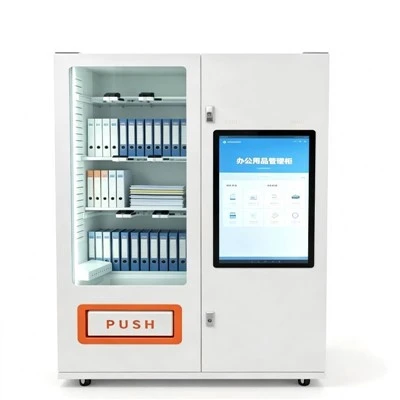
First, let’s define what I mean by “basic” and “advanced,” because these terms get thrown around a lot in smart office tech. A basic smart office cabinet is essentially a standard office cabinet (think metal or wooden, standard dimensions) with one or two simple, non-negotiable smart features. Most basic models are entry-level, designed for small teams or first-time office managers testing out smart office tools. Their core features are usually keyless access via a code or a single RFID key fob, basic inventory tracking (like a simple count of items inside that doesn’t update in real time), and maybe a low-battery alert that sends a text or an email once every 30 days. There’s no cloud integration, no app sync beyond a basic SMS portal, and they don’t connect to other office tools.
Advanced smart office cabinets, on the other hand, are built for businesses that rely on their office storage to run daily operations. These come with a full suite of connected, real-time features: biometric access (fingerprint or facial recognition), cloud sync with project management tools like Asana or Slack, IoT integration with office lighting and HVAC systems, automatic activity logs that detail who accessed what and when, and even built-in charging ports for laptops, tablets, and office gear. They’re made with durable, commercial-grade materials, come with custom dimensions, and include 24/7 technical support instead of the basic 9-to-5 support most basic cabinets offer.
Now, the price difference. Let’s start with hard numbers, based on data from the 2024 Global Smart Office Furniture Report, client feedback I’ve collected this year, and my own 8 years of sourcing and selling these cabinets. On average, a basic smart office cabinet (3 feet wide, 2 feet deep, 4 feet tall—standard small to medium size) costs between $450 and $850 per unit. That’s a one-time purchase, no subscription fees for the most part, though some basic models charge a tiny fee for premium SMS alerts. For comparison, a standard non-smart metal office cabinet of the same size costs $150 to $300, so the “smart upgrade” here is $300 to $550 per unit. That makes sense for a basic model—you’re paying for the keyless lock and basic inventory tracking, not much else.
Advanced smart office cabinets don’t have a one-size-fits-all price, because they’re customizable. A standard size advanced cabinet (same 3x2x4 feet) costs between $1,800 and $3,200 per unit, and if you need custom dimensions, extra compartments, or additional features like temperature control for sensitive items (like lab samples or prescription office supplies), that can jump to $3,500 or more. Wait, that’s a huge gap—between $1,350 and $2,350 more per unit than basic? Let’s put that in perspective with real client scenarios, because the number doesn’t mean anything until you see it in action.
Take a small startup of 15 people that only needs storage for team laptops, meeting room adapters, and a few confidential project files. Last quarter, I worked with a SaaS startup in Austin that went with 8 basic smart cabinets for their open work space. Total cost was $5,200 (8 units at $650 each). They loved the keyless locks (no more lost keys) and basic inventory tracking (they stopped buying duplicate adapters, saving them $200 a month). But after 3 months, they realized they were missing key features: when a team member left the company, they had to re-code 4 cabinets, which took the office manager 3 hours. Also, if an adapter went missing, they couldn’t track exactly who took it, only that it was gone. They didn’t need the advanced features right away, but for a small team scaling, those gaps started to add up.
Now, take a mid-sized marketing agency of 50 people that manages client files and high-end camera gear for content shoots. Last year, I worked with that agency in Chicago that went with 12 advanced smart office cabinets. Total cost was $27,000 (12 units at $2,250 each). They paid more upfront, but here’s what they gained: biometric access so only authorized staff can get to client confidential files, activity logs that show exactly when a camera was taken out and by who (critical for insurance and liability), cloud sync that ties storage access to their Asana project boards, so when a campaign is marked “live,” the cabinet holding campaign files is automatically unlocked for the entire team for the duration of the project. They also saved an average of $1,200 a month by reducing lost gear, because they could see exactly where every camera, lens, and file folder was at all times. For them, the advanced cabinet paid for the price difference in just 17 months, vs. if they’d bought basic cabinets, which would have cost them more in lost items and labor for re-coding and tracking.
But wait, there’s more to the price story than just the upfront cost. A lot of suppliers don’t mention the total cost of ownership (TCO) over 5 years, which is where the real difference shows. Let’s compare TCO for a single cabinet, basic vs. advanced, over 5 years, using real maintenance and usage data:
- Basic smart cabinet: Upfront cost $650, annual maintenance (replacing RFID fobs, fixing minor lock issues) $50 a year, no subscription fees, average lifespan 7 years. Total TCO over 5 years: $650 + (5*$50) = $900.
- Advanced smart cabinet: Upfront cost $2,250, annual maintenance (biometric sensor calibration, cloud storage fees) $100 a year, no extra fees for most core features, average lifespan 10 years. Total TCO over 5 years: $2,250 + (5*$100) = $2,750.
That’s still a big gap, but the TCO difference isn’t just about money—it’s about productivity. For the startup I mentioned earlier, their office manager spent 10 hours a month dealing with lost keys and tracking missing items, which cost them $25 an hour (the equivalent of entry-level admin pay) so $300 a month, or $1,800 over 5 years. If they’d gone with advanced cabinets, that administrative labor would be cut by 80%, saving them $1,440 over 5 years. So the actual TCO, when you add labor savings, is way smaller than the raw number suggests.
Another factor that drives the price difference is build quality. Basic smart cabinets are often made with thinner metal or particleboard with a vinyl finish, designed for light use (10 hours a day, 5 days a week). Advanced cabinets are made with 16-gauge steel or solid hardwood, designed for heavy commercial use (24/7 in some industrial or healthcare settings). That’s not just marketing—particleboard basic cabinets will start to warp after 2 years in a high-traffic office, while advanced steel cabinets last a decade or more, so you don’t have to replace them as often.
Wait, but is there a middle ground? I get that not every business needs all the advanced features, and not every business can drop $2k a cabinet. Over the past year, I’ve started working with a line of mid-range smart office cabinets that bridge the gap: they have basic biometric access (no cloud integration, just local storage on the cabinet), real-time inventory tracking that syncs to a simple phone app (not Slack or Asana), and a 2-year maintenance plan instead of 5. These mid-range models cost between $1,200 and $1,700 per unit, which is half the price of advanced, and way more than basic. A lot of my clients with 25 to 40-person teams go for these—they get better security and tracking without the extra features they don’t need.
Let’s also talk about common misconceptions that lead to overpaying or underpaying. A lot of small businesses think they don’t need smart cabinets at all, so they buy non-smart wooden cabinets for $300 each, then spend $50 a month replacing lost keys and tracking missing items. That’s way more expensive than a basic smart cabinet, which pays for itself in lost key replacements in 2 months. On the flip side, a lot of large enterprises buy advanced cabinets for every storage need, even if a small cabinet for seasonal supplies would be way overkill. I had a client that bought 50 advanced cabinets for their 100-person office, when they only needed 20 for gear and client files, and the rest could have been basic for general supplies. They overspent $50,000 because they didn’t match the cabinet type to their actual needs.
As a supplier, my job isn’t to push the most expensive cabinet—it’s to help clients pick the right one, so they get the best value, not the best price tag. Last year, I helped a school district in Chicago with 30 classrooms choose 15 basic smart cabinets for teacher lesson plans and student supplies, at a total cost of $7,200, and 5 advanced smart cabinets for lab equipment, at $11,250. That mix worked for them: they didn’t need biometric access for lesson plans, but they did for $5k worth of lab microscopes. The total cost was $18,450, which was 30% less than if they’d bought all advanced cabinets, and way more secure than all basic.
Now, if you’re reading this and wondering which is right for your team, let’s wrap this up with a quick checklist I give every client:
- If you have 1-20 people, general storage needs, and a budget under $1,000 per cabinet: basic smart cabinets are a great choice. You’ll get keyless access and basic tracking, no extra costs you don’t need.
- If you have 21-50 people, need to track high-value items, or manage confidential files: mid-range smart cabinets will give you better security and tracking at a more affordable price than advanced.
- If you have 50+ people, need 24/7 access logs, cloud integration with your project tools, or storage for sensitive items like lab supplies or classified documents: advanced smart cabinets are worth the upfront cost, because they’ll save you money on labor and lost items in the long run.
At the end of the day, the price difference between basic and advanced smart office cabinets isn’t just about hardware—it’s about how each one works with your team, your processes, and your budget. As someone who’s been in this game long enough to see a lot of bad purchases (and a lot of great ones), I always tell clients to start with what they actually need, not what’s the most hyped. If you’re ready to talk through what your office needs, no sales pitches, no hidden fees, just real advice, reach out to our team to coordinate a time to discuss your requirements and tailored pricing for your space.
School Lockers References: Global Smart Office Furniture Report, 2024. Office Supply Productivity Benchmarking Survey, 2023. Commercial Smart Cabinet Maintenance Analysis, 2024.
Hangzhou Dongjie Intelligent Technology Co., Ltd.
Hangzhou Dongjie Intelligent Technology Co., Ltd. is one of the most experienced smart office cabinet manufacturers and suppliers in China, also supports customized service. Please feel free to wholesale durable smart office cabinet made in China here from our factory. For quotation, contact us now.
Address: 1st Floor, Building 2, No. 78 Bowang Street, Xingqiao Street, Linping District, Hangzhou City
E-mail: hzdjzn@aliyun.com
WebSite: https://www.cndongjiesmart.com/
