If you’ve ever Googled “filter purifier cost” while researching how to clean your home’s air or water, you’ve probably left more confused than when you started. As a filter purifier supplier who’s been in this game for over a decade, I hear that frustration all the time. Customers often expect a single, straightforward price tag—like a gallon of milk or a lightbulb—but filter purifiers aren’t one-size-fits-all. The cost depends on way more than just the machine itself, and skipping those details can lead to buying something that’s either way over your budget or not powerful enough for your needs. Let’s break this down like I would when I’m talking to a homeowner or business owner who’s got questions, not just numbers. Filter Purifier

First, let’s talk about the two main types of filter purifiers I supply, because that’s where almost every price difference starts: air filter purifiers and water filter purifiers. They’re built for totally different jobs, so their costs don’t even compare. I had a customer last year who bought a cheap air purifier because he thought it would filter his well water—big mistake. Don’t do that. If you need air purification, we’re talking about units that capture pollen, pet dander, wildfire smoke, or bacteria, depending on the filter. If you need water purification, these are heavy-duty units that remove lead, sediment, chlorine, or microplastics from drinking or process water. Their price ranges are worlds apart, so let’s split this up to make it clear.
For residential air filter purifiers, the cost usually lands between $80 and $800, depending on size and features. The $80 models are the ones you’ll see at big box stores—small, tabletop units designed for a single bedroom of 150 to 300 square feet. They work okay for light dust or mild allergies, but they struggle with more serious stuff, like wildfire smoke or a home with three long-haired dogs. The $300 to $500 range is where most of our best-selling residential models fall. These are mid-sized, cover 500 to 1,200 square feet, use HEPA filters (which capture 99.97% of particles as small as 0.3 microns—about the size of a smoke particle), and have adjustable fan speeds, smart features like app control, and filters that last 6 to 12 months. Then there are the premium models, above $600, for larger homes (1,500+ square feet) or people with severe allergies, asthma, or regular exposure to smoke. These have extra filters, like activated carbon for odors from cooking or paint, and even UV-C light to kill bacteria and viruses. I always tell customers if you’re looking to buy the cheapest air purifier, you’re probably wasting your money—those small units have to work non-stop, which means higher energy bills and shorter filter life, so you end up spending more in the long run.
Now, water filter purifiers for residential use are a bit different. Under-sink reverse osmosis (RO) systems, which are the most popular for removing lead and microplastics, cost between $200 and $1,500. Countertop water filters, which are simpler and don’t require installation, are cheaper—usually $50 to $200—but they only filter basic stuff like chlorine, not heavy metals. Whole-house water filter systems, which filter every drop that comes into your home, are a bigger investment: $1,000 to $4,000, because they need to handle higher volume and larger filters. I had a family last spring who came to me because their old under-sink filter wasn’t removing the sulfur smell from their well water. They tried a cheap countertop model first, which just masked the smell temporarily, so they upgraded to a mid-range under-sink RO unit for $450. It was a little more upfront, but they haven’t had to replace filters as often as the cheap one, and their water tastes way better. That’s the thing about filter purifiers: the lowest upfront cost isn’t always the best value.
Wait, but hold on—when people ask how much a filter purifier costs, they’re not just asking for the machine price, right? That’s the part most suppliers don’t tell you, and it’s where the real costs add up. Let’s talk about ongoing expenses, because that’s what trips people up. For air filter purifiers, the biggest ongoing cost is replacement filters. A basic HEPA filter for a small tabletop unit is $15 to $30, but for a mid-sized residential model, that same HEPA filter is $50 to $100, and the activated carbon filter is another $30 to $70. Most need to be changed every 6 to 12 months, so over 5 years, that’s $400 to $900 in filter costs alone. I always include filter replacement schedules in every quote I give, so customers don’t get sticker shock later. For water filter purifiers, RO membranes (the part that does the heavy lifting) need to be changed every 2 to 5 years, and pre-filters (which catch big sediment) every 6 to 12 months. Those replacement parts cost $100 to $300 a year, depending on the system. That’s why a $200 countertop filter might seem cheap, but if it needs a $50 replacement filter every 3 months, that’s $200 a year—way more than the mid-range under-sink unit I mentioned earlier, whose filters only cost $150 a year.
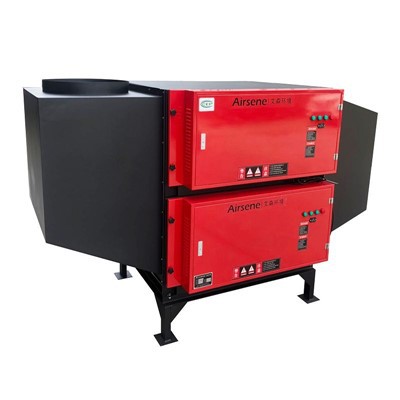
Now, what if you’re not a residential customer? Small businesses, restaurants, clinics, or warehouses have totally different needs, so their filter purifier costs go way up. A restaurant, for example, needs air purifiers that can handle open kitchen odors, grease, and high foot traffic. Commercial air filter purifiers range from $1,000 to $10,000, depending on how big the space is and what they need to filter. A dental clinic needs water filters that meet health department standards for safe drinking water, so their units are more specialized, costing $2,000 to $5,000. Warehouses with dust or industrial fumes might need large duct-mounted filter systems, which can cost $10,000 or more. I work a lot with local cafes and clinics, and I always tailor solutions to their space—no need to sell a $10,000 system to a small coffee shop that only needs a couple of mid-sized air purifiers for the dining area.
There are a few factors that can make the cost go up or down, depending on your specific situation. The first is the type of filter, obviously. HEPA is standard for air purification, but if you need medical-grade filters for a clinic or lab, that adds 20% to 50% to the machine cost. For water, RO is more expensive than carbon filters, but it removes more contaminants. Size is another big one— a unit for a 1,000-square-foot apartment will always be cheaper than one for a 3,000-square-foot home or a 10,000-square-foot warehouse. Features matter too: smart sensors that adjust fan speed based on air quality, app control, noise reduction (important for bedrooms or offices), and energy efficiency can add a little upfront cost, but they save you money on electricity and filters over time. I always recommend looking for ENERGY STAR certified filter purifiers, because they use 20% less energy than standard models, which adds up over the unit’s lifespan.
I’ve seen a lot of bad purchases over the years, and most of them happen because people don’t ask the right questions when they’re shopping. A few years back, I had a customer who bought a $120 air purifier online because it was cheap, and within a month, it was making a loud buzzing noise and not cleaning the air at all. When he brought it back to me, I tested it—its HEPA filter was so flimsy it wasn’t even capturing small particles, and it used way more electricity than a better model. He ended up buying a mid-sized model from us for $350, and he told me it worked way better, and the filter costs over 5 years would be less than what he wasted on the cheap unit. That’s why I always advise people to look beyond the upfront price.
Another thing I want to talk about is what’s included in the cost. Some suppliers will sell you just the machine, and you have to pay for installation, extra parts, or even shipping on top. When I give a quote, I make sure it includes everything: the unit itself, standard installation (for in-stock models), first set of replacement filters, and a 1-year warranty. No hidden fees, no surprises. I had a customer once who got a quote from another supplier for a whole-house water filter that was $1,000 cheaper than mine, but when she looked closely, the quote didn’t include installation, which would have cost her $800, or the extra filters she needed, which were $300. By the time she added those, my quote was actually cheaper. That’s why it’s so important to get a full, itemized quote, not just a base price.
So let’s recap, to make this easy. For residential use: air filter purifiers range from $80 to $800 upfront, with $400 to $900 in filter costs over 5 years. Water filter purifiers range from $50 to $1,500 upfront, with $100 to $300 in annual maintenance costs. For commercial use, costs start at $1,000 and can go up to $10,000 or more, depending on the space and needs. The key isn’t to find the cheapest unit—it’s to find the unit that matches your specific needs, so you don’t pay for features you don’t need, or skimp on features you do need.
If you’re trying to figure out exactly how much a filter purifier would cost for your home or business, the best way is to reach out. I can ask a few quick questions: how big is the space, what contaminants are you trying to filter (like pollen, smoke, lead, etc.), do you have any special needs (like noise for a bedroom, health department standards for a clinic), and then give you a custom quote. No pressure, no sales pitch—just honest advice. I’ve been doing this long enough to know that the right filter purifier isn’t just about the cost, it’s about making your air or water cleaner, and saving you money in the long run. If you’re ready to talk through your options, just reach out to discuss your specific requirements. There’s no one-size-fits-all answer, but we can find something that works for your budget and your needs.
Filter Purifier References
- Environmental Protection Agency. (2023). Indoor Air Quality, Air Purifiers. U.S. EPA.
- Water Quality Association. (2022). Residential Water Treatment Systems Cost Guide. WQA.
- ENERGY STAR. (2023). Certified Air Purifiers and Water Filters: Efficiency and Cost Savings. EPA.
- American Thoracic Society. (2021). The Impact of HEPA Air Purifiers on Respiratory Health in Residential Settings. ATS Journals.
- National Sanitation Foundation. (2022). Standard 58 for Reverse Osmosis Drinking Water Treatment Systems. NSF International.
Shaoxing Airsene Environmental Technology Co., Ltd.
As one of the most professional filter purifier manufacturers in China, we’re featured by quality products and low price. Please rest assured to buy discount filter purifier made in China here from our factory. We also accept customized orders.
Address: No. 1821, Renmin West Road, Shangyu Economic Development Zone, Shaoxing, Zhejiang Province
E-mail: airsene@163.com
WebSite: https://www.airsene.net/
