Hey there! I’m a supplier of PVG Conveyor Belts, and today I wanna chat about the heat – dissipation performance of these belts. You might be wondering why heat dissipation is such a big deal when it comes to conveyor belts. Well, stick around, and I’ll break it all down for you. PVG Conveyor Belt
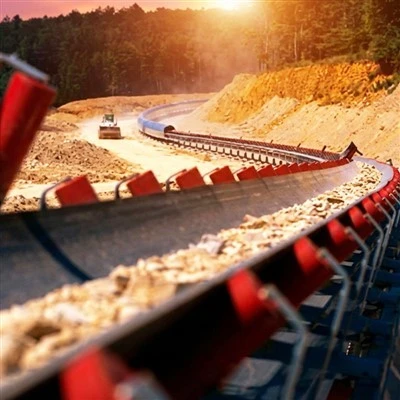
First off, let’s get into what PVG Conveyor Belts are. PVG stands for Polyvinyl Chloride and Polyurethane, and these belts are widely used in various industries, like mining, cement, and food processing. They’re known for their durability, flexibility, and resistance to abrasion. But one aspect that often gets overlooked is their heat – dissipation ability.
In a conveyor system, heat can be generated in a few different ways. Friction is a major culprit. As the belt moves over the pulleys and rollers, there’s constant rubbing, which creates heat. If this heat isn’t dissipated properly, it can cause a lot of problems. For example, the belt might start to wear out faster. The material can become brittle, leading to cracks and tears. And in extreme cases, it could even result in the belt catching fire!
So, how does the PVG Conveyor Belt handle heat? Well, the materials used in PVG Belts play a crucial role. Polyvinyl Chloride (PVC) has some inherent heat – resistant properties. It can withstand a certain amount of heat without deforming too quickly. Polyurethane, on the other hand, is known for its good thermal conductivity. This means that it can transfer heat away from the source more efficiently.
Let’s talk about the structure of the PVG Conveyor Belt. It usually has multiple layers. The top cover is often made of a special PVC – based compound that is formulated to resist heat and abrasion. This top layer acts as a shield, protecting the inner layers from the heat generated by external factors. The carcass, which is the core of the belt, is typically made of high – strength materials like polyester or nylon. These materials not only provide the necessary strength for the belt to carry heavy loads but also have decent heat – dissipation properties.
The bottom cover also plays an important part. It’s in contact with the rollers and pulleys, and it helps to transfer the heat generated by friction to the surrounding environment. The design of the bottom cover is optimized to ensure maximum contact area with the rollers, which in turn helps in better heat transfer.
Now, I’ve been in the business for a while, and I’ve seen firsthand how different operating conditions can affect the heat – dissipation performance of PVG Conveyor Belts. In high – temperature environments, like in some mining operations where the ambient temperature can be really high, the heat – dissipation challenge becomes even more significant. But here’s the good news: our PVG Conveyor Belts are engineered to handle these tough conditions.
We’ve done a lot of research and development to improve the heat – dissipation capabilities of our belts. For example, we’ve added special heat – conducting additives to the belt materials. These additives enhance the thermal conductivity of the belt, allowing it to dissipate heat more quickly. We’ve also improved the surface texture of the belt. A rougher surface can increase the air flow around the belt, which helps in cooling.
Another factor to consider is the speed of the conveyor. When the belt moves at a higher speed, there’s more friction, and thus more heat is generated. But our belts are designed to maintain good heat – dissipation performance even at high speeds. We’ve optimized the layout of the layers and the materials used to ensure that the heat can be managed effectively, no matter how fast the belt is moving.
Let’s look at some real – world scenarios. In a food processing plant, the PVG Conveyor Belt might be exposed to heat from the food products being conveyed. For example, if the plant is baking bread, the conveyor belt has to deal with the hot loaves. Our belts are able to dissipate the heat from these hot products quickly, which not only protects the belt but also helps to maintain the quality of the food.
In a mining operation, the conveyor belts are often used to transport large amounts of ore and other materials. The weight of these materials and the friction between the belt and the rollers can generate a significant amount of heat. Our PVG Conveyor Belts are up to the task. They can handle the heavy loads and dissipate the heat effectively, reducing the risk of breakdowns and increasing the overall efficiency of the mining process.
I know you might be thinking, "How can I be sure that your PVG Conveyor Belts have good heat – dissipation performance?" Well, we’ve conducted a lot of tests. In our in – house testing facilities, we simulate different operating conditions, including high temperatures, high speeds, and heavy loads. We measure the temperature of the belt at different points and monitor how quickly the heat is dissipated. Our belts have consistently passed these tests with flying colors.
In addition to our in – house tests, we also have a lot of satisfied customers who can attest to the heat – dissipation performance of our PVG Conveyor Belts. They’ve reported fewer belt failures, longer belt lifespans, and improved operational efficiency after switching to our belts.
So, if you’re in the market for a reliable PVG Conveyor Belt with excellent heat – dissipation performance, you’ve come to the right place. Whether you’re in the mining industry, food processing, or any other industry that requires a conveyor belt, we’ve got the solution for you.

If you’re interested in learning more about our PVG Conveyor Belts or want to discuss your specific requirements, don’t hesitate to reach out. We’re always happy to have a chat and help you find the best belt for your needs. Let’s start a conversation and see how we can work together to improve your conveyor system’s performance.
PVG Conveyor Belt References:
- Industry reports on conveyor belt technology and performance
- Internal research and development data from our company’s testing facilities
- Customer testimonials and feedback on the performance of our PVG Conveyor Belts
Alumina Technology (Qingdao) New Materials Co., Ltd.
As one of the most professional pvg conveyor belt manufacturers and suppliers in China, we also support customized service. With abundant experience, we warmly welcome you to buy pvg conveyor belt for sale here and get quotation from our factory. For price consultation, contact us.
Address: No.448, Jiangshan South Road, Huangdao District, Qingdao City, Shandong Province
E-mail: Gloria.zhang@contitech.cn
WebSite: https://www.altechconveyorbelt.com/
