Insulation resistance measurement is a critical aspect in the evaluation of the performance and safety of lightning arresters and insulators. As a leading provider of Lightning Arrester and Insulator Test Equipment, I have witnessed firsthand the importance of accurate insulation resistance testing. In this blog post, I will delve into how our test equipment effectively measures insulation resistance. Lightning Arrester and Insulator Test Equipment
Understanding the Significance of Insulation Resistance
Insulation resistance is a key parameter in electrical systems, especially when it comes to lightning arresters and insulators. A lightning arrester is designed to protect electrical equipment from over – voltage surges caused by lightning strikes, while insulators prevent current leakage from conductive parts to the ground or other non – intended paths. Measuring the insulation resistance of these components helps to detect potential problems such as insulation degradation, moisture ingress, or mechanical damage.
Degraded insulation can lead to increased leakage currents, which in turn can cause overheating, equipment failure, and even pose a safety hazard. By regularly measuring the insulation resistance, we can identify issues early and take preventive measures to avoid costly downtime and ensure the reliable operation of the electrical system.
The Basic Principle of Insulation Resistance Measurement
The fundamental principle of measuring insulation resistance is based on Ohm’s law. Ohm’s law states that V = IR, where V is the voltage applied across the insulation, I is the current flowing through the insulation, and R is the insulation resistance. To measure the insulation resistance, a known DC voltage is applied across the insulation, and the resulting current is measured. Then, the insulation resistance can be calculated using the formula R = V/I.
However, in practice, measuring insulation resistance is not as straightforward as applying a simple DC voltage and measuring the current. There are several factors that need to be taken into account, such as the polarization effect of the insulation material, the surface leakage current, and the influence of environmental conditions.
Our Test Equipment: A Closer Look
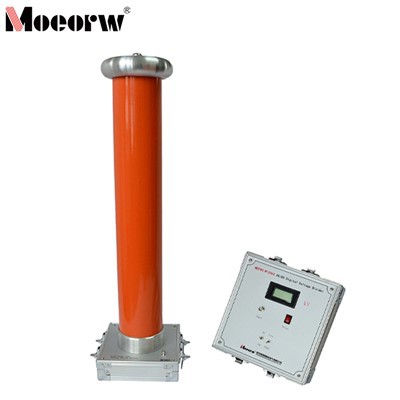
Our Lightning Arrester and Insulator Test Equipment is designed to overcome these challenges and provide accurate insulation resistance measurements. The equipment is equipped with a high – precision voltage source that can generate a stable DC voltage. This voltage is carefully selected based on the type and rating of the lightning arrester or insulator being tested.
When the voltage is applied to the test object, the equipment measures the current flowing through the insulation. To eliminate the influence of the polarization effect, the measurement is usually taken after a certain period of time, allowing the polarization current to decay. Our equipment is also designed to distinguish between the true insulation current and the surface leakage current. Surface leakage current can be caused by dirt, moisture, or other contaminants on the surface of the insulator. To minimize the impact of surface leakage, our test equipment uses special measurement techniques, such as the use of guard electrodes.
The guard electrode is a conductive ring that is placed around the test object. The guard electrode is connected to the same potential as the high – voltage terminal of the test equipment. This way, the surface leakage current flows through the guard electrode instead of being included in the measurement of the insulation current. As a result, the measured insulation resistance is more accurate and reflects the true condition of the insulation material.
Measurement Process
The measurement process using our test equipment is relatively simple and efficient. First, the test object is properly connected to the test equipment. The high – voltage terminal of the test equipment is connected to one end of the lightning arrester or insulator, while the low – voltage terminal is connected to the other end. The guard electrode, if applicable, is also connected according to the manufacturer’s instructions.
Once the connections are made, the operator starts the test by setting the appropriate test voltage and measurement time. The test equipment then applies the DC voltage to the test object and measures the current. The measured current is processed by the internal microcontroller of the test equipment, and the insulation resistance is calculated and displayed on the screen.
During the measurement, the test equipment continuously monitors the test parameters, such as the applied voltage, the measured current, and the calculated insulation resistance. If any abnormal values are detected, the equipment will issue an alarm to alert the operator.
Influence of Environmental Conditions
Environmental conditions can have a significant impact on the insulation resistance measurement. Temperature, humidity, and altitude are some of the key environmental factors that need to be considered.
Temperature affects the conductivity of the insulation material. Generally, as the temperature increases, the insulation resistance decreases. This is because the increased temperature provides more energy to the charge carriers in the insulation material, making it easier for them to move and conduct electricity. Our test equipment is calibrated to compensate for the temperature effect, ensuring accurate measurements at different temperatures.
Humidity can also affect the insulation resistance. High humidity can cause moisture to accumulate on the surface of the insulation material, increasing the surface leakage current and reducing the measured insulation resistance. To minimize the impact of humidity, our test equipment can be used in conjunction with dehumidification equipment in high – humidity environments.
Altitude affects the air density and the ion concentration in the air. At higher altitudes, the air density is lower, and the ion concentration is higher, which can lead to increased corona discharge and surface leakage. Our test equipment is designed to take these factors into account and provide reliable measurements at different altitudes.
Applications in Real – World Scenarios
Our Lightning Arrester and Insulator Test Equipment has been widely used in various real – world scenarios. In power generation plants, the equipment is used to test the insulation resistance of lightning arresters and insulators on generators, transformers, and other high – voltage equipment. Regular testing helps to ensure the safe and reliable operation of the power generation system.
In power transmission and distribution networks, our test equipment is essential for maintaining the integrity of the transmission lines. By measuring the insulation resistance of insulators on the transmission towers, power companies can detect potential insulation problems early and take corrective actions to prevent power outages.
In industrial facilities, such as factories and mines, our test equipment is used to test the electrical insulation of equipment used in harsh environments. This helps to ensure the safety of workers and the normal operation of the production process.
Conclusion

Measuring the insulation resistance of lightning arresters and insulators is a crucial task for ensuring the safety and reliability of electrical systems. Our Lightning Arrester and Insulator Test Equipment is designed to provide accurate and reliable insulation resistance measurements. Through the use of advanced measurement techniques and the consideration of environmental factors, our equipment can effectively detect potential insulation problems and help users take preventive measures.
Oscillatory Wave Partial Discharge Tester If you are interested in purchasing our Lightning Arrester and Insulator Test Equipment or discussing your specific testing needs, please feel free to contact us. Our team of experts is always ready to provide you with professional advice and support.
References
- "Electrical Insulation Handbook", IEEE Press
- "Insulation Testing and Monitoring of Electrical Equipment", IET Power and Energy Series
Wuhan Moen Intelligent Electric Co., Ltd.
As one of the most professional lightning arrester and insulator test equipment manufacturers in China, we’re featured by quality products and good price. Please rest assured to buy high quality lightning arrester and insulator test equipment in stock here and get quotation from our factory. Customized orders are welcome.
Address: Building A, No.1, Fenghuangyuan 2nd Road, Donghu New Technology Development Zone, Wuhan, Hubei, China
E-mail: info@hvhipotsystem.com
WebSite: https://www.hvhipotsystem.com/
