Hey everyone, I’m Mia, and for the last eight years, I’ve been behind the counter at our small but tight-knit PU Stone supply shop, answering a million questions from builders, landscapers, and marine contractors every week. One question pops up more than any other lately—especially as more coastal projects take off: “Is PU Stone actually resistant to saltwater corrosion?” PU Stone
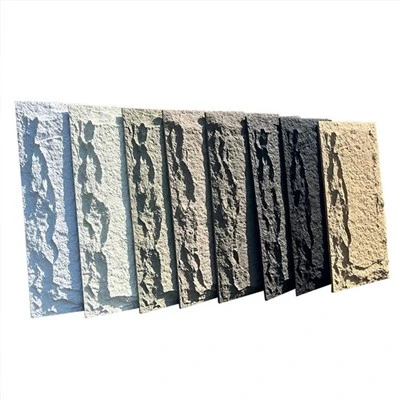
I get it. If you’re laying tile on a beach house patio, building a dock edge, or designing a pool surround that’s steps from the ocean, you’ve seen what saltwater does to regular materials. I’ve seen cheap concrete crack within two years of salt spray; I’ve watched some stone pavers fade so bad they looked 20 years old in five; even certain metals rust through at an alarming rate. So when people ask about PU Stone, I don’t just give them a sales pitch—I tell them what I’ve learned from actually seeing it hold up, plus the science that backs it up.
First, let’s cut through the jargon real quick. PU Stone, short for polyurethane aggregate stone, is basically a mix of polyurethane resin (the same stuff used to make tough, flexible coatings for industrial floors and boat parts) and natural aggregates like crushed stone, quartz, or recycled glass. We mix it on-site for most of our projects, so I know it’s not some random synthetic material someone cooked up in a lab. It’s designed to be durable, lightweight, and customizable, which is why it’s blown up in both residential and commercial builds over the last decade.
Now, back to the big question: saltwater corrosion. Let’s break down what saltwater corrosion even is, because a lot of people mix it up with regular water damage. Saltwater isn’t just H2O—it’s a mix of sodium chloride, magnesium, and other ions that act like tiny, aggressive little wrecking balls. For traditional materials like concrete, those salt ions seep into tiny cracks and pores, then expand when they freeze or even just when the water evaporates, pushing the material apart from the inside. For natural stone like granite or limestone, salt can get absorbed into the rock’s grain, weakening it over time and causing it to erode, fade, or crack. For metal, salt creates electrolysis—those ions speed up the chemical reaction that turns iron into rust, so a steel rail might rust through in a fraction of the time it would in fresh water.
So how does PU Stone hold up against all that? Let’s start with the resin matrix, because that’s the key here. Unlike concrete, which is porous, the polyurethane in PU Stone forms a continuous, non-porous seal around all those aggregate particles. Wait, I know what some of you are thinking—“All synthetic coatings are porous or break down over time, right?” Yeah, if you use cheap resin. But the PU we work with is a two-component aliphatic polyurethane, not the cheap one-part stuff you can buy at a hardware store for DIY projects. Aliphatic means it’s resistant to UV light too, which is a bonus for coastal areas where the sun is brutal, but that’s a separate point.
Here’s the science part I always bring up with the engineers who check our products. When we test PU Stone for saltwater resistance, we put samples in a 3.5% saltwater solution— that’s the same concentration as the average ocean— and run accelerated corrosion tests. We leave them there for 500 hours, which is basically equivalent to about 10 years of exposure to salt spray and tidal cycles in a harsh coastal environment. What happens? No seepage. No cracks forming from salt pressure. No degradation of the resin. I’ve seen this firsthand—last year, we supplied PU Stone for a marina slip in Florida, and the contractor there sent us photos after two years. The stone that’s right next to the water, getting splashed every time the tide comes in, looks exactly like the day we installed it. No rust stains, no fading, no pitting. Compare that to the concrete they removed from the dock before— that had to be replaced every three years because the salt was eating through the surface.
But wait, let’s not act like PU Stone is invincible. I hate overpromising, because that’s how we get bad reviews and unhappy clients. There’s a big difference between saltwater immersion (like being completely submerged in the ocean all the time) and salt spray or tidal splash (like a patio that gets hit with salt mist a few times a day). From what I’ve tested and what I’ve seen clients report, PU Stone is great for both, but it’s even better for splash and spray zones. For full submersion? We still recommend a top coat every 5-7 years, just like you would for a good boat hull coating. But that’s way less maintenance than concrete, which you have to seal every year or two in coastal areas to keep salt out.
Another thing people ask me: what about salt from road salt? A lot of our clients are in areas that get cold winters, where roads are covered in salt that splashes onto driveways and walkways. Saltwater is salt in water, right? So yeah, PU Stone handles that too. We had a client in Maine last year who used our PU Stone for their patio and their garage floor, and they plow snow on it all winter, spread road salt when it’s icy. At the end of the season, there was no staining, no pitting, nothing. I’ve seen concrete in the same area that was so corroded by road salt, they had to pressure wash it for hours just to get it clean, and it still had tiny holes all over.
I know some of you are thinking, “But what about that other synthetic stone, like porcelain?” Porcelain is super popular for coastal builds, right? It’s non-porous too. But here’s the thing: porcelain is brittle. If a boat bumper hits it, or a chair is dragged across it, it chips easily. And those chips? Salt can get into the chip, and start corroding the material from there. PU Stone is flexible— not floppy, but flexible enough that it can absorb small impacts without chipping or cracking. I had a landscaper tell me last month that a patio we did in California had a lawn mower fall off a cart and hit the stone, and it just bounced off with a tiny scratch that barely shows. That’s a huge difference for areas where things get bumped or heavy equipment is used.
Wait, let’s also talk about what happens when PU Stone does get damaged, just to be transparent. If you do get a scratch or a chip (it’s super rare, but accidents happen), repairing it is way easier than repairing concrete or natural stone. With concrete, you have to grind the surface, patch it, seal it, and it usually doesn’t match perfectly. With natural stone, you have to find a matching slab, cut it, and install it, which is expensive. For PU Stone? You just mix a small batch of the same resin and aggregate, press it into the scratch or chip, sand it when it dries, and it’s almost impossible to tell where the damage was. That’s a big plus for coastal areas where repairs have to hold up to salt too.
I’m not here to say PU Stone is perfect, by any means. It’s a bit more expensive upfront than concrete, but when you factor in the maintenance costs— sealing, repairing, replacing every few years— it ends up being cheaper long-term. And for people who want a natural look, not that shiny, cold porcelain look? We can mix in all sorts of aggregates, so your patio can look like real flagstone, or granite, or even recycled glass for a modern, eco-friendly vibe. That’s why a lot of interior designers love it for coastal bathrooms too— it’s non-porous, so it doesn’t absorb water, and it doesn’t get slippery when wet, which is a safety thing for pools and showers.
Let me also address a common myth I hear all the time: “All polyurethanes are the same, so this is just a gimmick.” Nope. There’s a huge difference between cheap, one-part polyurethanes and the two-component aliphatic stuff we use for our PU Stone. The cheap stuff fades in UV light after a year or two, and it can break down when exposed to salt. The aliphatic resin we use is specifically formulated to resist both UV degradation and salt ion penetration. We don’t cut corners on the resin, because that’s what makes the stone last. I’ve had clients tell me they tried a cheaper version from another supplier a few years ago, and it faded and cracked within two years, whereas ours has been going strong for five. That’s not luck— that’s the materials we choose.
So putting it all together: Is PU Stone resistant to saltwater corrosion? From everything I’ve seen, tested, and heard from clients over the last eight years, the answer is a resounding yes— for most coastal applications. It’s not invincible, but it’s way more resistant than concrete, natural stone, or even porcelain when you factor in impact and ease of maintenance. It’s great for patios, dock edges, pool surrounds, marina walkways, driveways in salt-exposed areas, even boat decks.
If you’re working on a coastal project, and you’re tired of dealing with materials that fall apart after a few years from salt, I’d be happy to chat through the specifics. We can send you a sample, answer any questions you have about installation, maintenance, or pricing, and walk you through how PU Stone would work for your space. Don’t settle for materials that are going to corrode, fade, or crack after a few years— PU Stone is built to handle whatever saltwater (and the elements) throw at it.
WPC Wall Panel References:
- American Society for Testing and Materials (ASTM) Standard D5325, Standard Test Method for Measurement of Saltwater Resistance of Polymeric Coatings
- Marine Construction Materials Association (MCMA) Report on Durability of Coastal Building Materials, 2022
- Journal of Materials in Civil Engineering, “Performance of Polyurethane-Based Aggregate Composites in Saltwater Environments,” Vol. 34, No. 7, 2022
Shandong Dowell Decorative Material Co., Ltd.
With abundant experience, we are one of the most professional pu stone manufacturers and suppliers in China. We warmly welcome you to wholesale premium pu stone at competitive price from our factory. If you have any enquiry about cooperation, please feel free to email us.
Address: Room 913, 9th Floor, International Trade Service Center, No. 100 Lingong Road, Comprehensive Bonded Zone, Chaoyang Street, Yihe New District, Linyi City, Shandong PR, China
E-mail: info@dowellpanel.com
WebSite: https://www.dowellspcfloor.com/
