Hey everyone, it’s Jake from your go-to weld end caps supplier, and today we’re breaking down one of the most common questions I get from our clients (engineers, fabricators, plant managers, you name it): What the hell is the shear strength of weld end caps? Look, I get it—when you’re designing a pressure vessel, a pipe spool, a structural joint, or even a custom fabrication part, you can’t just slap on any end cap and call it good. Messing up the strength here leads to leaks, downtime, or even way worse, and that’s exactly why I spend so much time making sure my team and our clients get this right. No jargon overload, no fancy equations that’ll make you zone out—just real, usable info that applies to the parts we ship out every single day. Weld End Caps
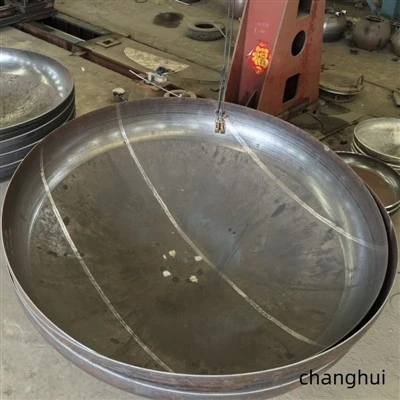
First off, let’s keep this basic: what even is a weld end cap, for anyone new here? It’s that rounded, disc-shaped part we weld onto the end of a pipe, tube, or container to seal it off. Whether you’ve got a 2-inch steel pipe for a industrial water line, a 12-inch carbon steel tank for chemical storage, or a custom stainless steel part for a food processing line, end caps are the final seal that keeps everything contained. Shear strength, in the simplest terms, is how much force you can push (or pull) parallel to the surface of that weld before it breaks. Think of it like sliding two pieces of paper against each other—if they can’t take that sliding force, they tear. That’s exactly what’s happening when a weld end cap fails in shear.
Now, here’s the thing: there’s no one-size-fits-all number for shear strength of weld end caps. I see clients all the time come to me asking, “What’s the PSI rating?” like it’s a set number, but that’s not how this works. It depends on a ton of variables, and I’ve learned over the 8 years I’ve been supplying weld end caps that ignoring even one of these makes your end cap way more likely to fail when you need it most. Let’s walk through the big ones that actually matter for the parts we sell.
First up: the base material of the end cap. We stock everything from carbon steel to stainless steel, aluminum, even specialty alloys like Inconel for high-heat applications. Each of these has its own shear strength. Carbon steel, for example, has a shear strength around 30,000 to 40,000 PSI for common grades like A36. 304 stainless steel? That’s a bit lower, around 25,000 to 35,000 PSI, because it’s more ductile (it bends instead of snapping suddenly, which is actually a good thing most of the time). Aluminum? Even lower, around 15,000 to 25,000 PSI—you’ve got to account for that if you’re working with lightweight piping for HVAC or something. But wait, this is just the base material. The weld seam itself has its own strength, and that’s often where people go wrong.
Next, the weld type and quality. Not all welds are equal. We offer two main types of weld end caps: butt-weld and socket-weld, and their shear strengths are totally different. Butt-weld end caps are the most common—you line them up flush with the pipe, weld around the circumference, so the shear force is acting on that full circular weld seam. Socket-weld end caps slide into the end of the pipe, so the weld is on the outer edge where the cap meets the pipe’s inner wall. That means the shear area here is smaller, so the strength is lower—like 20 to 30% less than a comparable butt-weld cap, all else equal. Then there’s weld quality: if you’ve got a sloppy weld with gaps, porosity, or incomplete penetration, that’s a weak point. I tell every client that paying for a certified weld is non-negotiable for high-stress jobs. A 2019 study from the American Welding Society (AWS) found that 60% of end cap failures in industrial piping came down to poor weld quality, not the cap material itself—crazy, right? That’s why we do a full inspection on every end cap we ship, no exceptions, because I don’t want my name on a part that could fail.
Then there’s the thickness of the end cap and the pipe wall. If you use a super thin end cap for a thick, high-pressure pipe, that’s a problem. Let’s say you’ve got a 6-inch pipe with a 0.375-inch wall. An end cap with 0.25-inch thickness will have a smaller shear area than a 0.375-inch cap, so its shear strength is lower. It’s basic math: more surface area in the weld seam = higher shear strength. But you can’t just crank up the thickness randomly—you have to match it to the pipe’s specs to keep a proper fit and flush weld. For example, all our butt-weld end caps come in thicknesses that match standard pipe schedules (Schedule 40, Schedule 80, etc.) so you don’t have to guess if it’ll line up right. That’s one of the big reasons our clients come back—we build parts that actually work with standard piping, no custom machining needed.
Another factor that’s way more important than people realize: the application’s loading conditions. Is this end cap holding back pressure from a liquid, or is it being pulled and pushed constantly, like on a structural pipe support? For dynamic loads (like moving equipment or pipes that vibrate constantly), the shear strength isn’t just a static number—you have to account for fatigue over time. I once had a client who installed our carbon steel end caps on a conveyor frame pipe for a mining operation. At first, everything was fine, but after 18 months, some caps started cracking in the weld. Turns out, they used static shear specs for a dynamic load, so the strength was too low. We worked with them to swap to thicker Schedule 80 end caps, and they haven’t had an issue since. That’s the kind of hands-on support we offer—we don’t just sell parts; we help you pick the right one for your job.
Wait, let’s get into actual numbers, because I know you guys love concrete examples. Let’s take a common scenario: a butt-weld carbon steel A36 end cap, matched to Schedule 40 6-inch pipe, 0.375-inch thick wall. The shear area here is the circumference of the end cap multiplied by the wall thickness. Circumference of a 6-inch pipe is about 18.85 inches, times 0.375 inches = ~7.07 square inches. Multiply that by the shear strength of A36 steel (let’s take 35,000 PSI, a middle ground) and you get ~247,000 pounds of shear strength. That’s insane—for most industrial jobs, that’s way more than you’ll ever need. But if you’re using a socket-weld end cap for that same pipe, the shear area is only around 4.7 square inches, so that number drops to ~164,500 pounds. Still a lot, but if you’re dealing with extreme pressure or constant dynamic load, that’s a big gap. And if you use a 0.25-inch thick end cap, the shear area drops to ~4.7 square inches for the butt-weld too, so now it’s also ~164,500 pounds. See how each variable adds up?
Now, what about failure modes? Because shear strength isn’t just about how much force you can apply—how does it fail? Most end caps fail in what’s called “shear tear,” where the weld seam splits evenly along the circumference, right where it meets the pipe. Sometimes, if the base material is weaker than the weld, the end cap itself will tear through the wall before the weld gives. That’s actually a better failure mode, because it’s a more obvious warning—you’ll see the cap bend or crack before it fully separates. If the weld is the weak point, it can fail suddenly with no warning, which is way more dangerous. That’s why we prioritize weld strength that’s at least as strong as the base material for all our weld end caps—we want a visible failure before a catastrophic one.
I also get a lot of questions about standard testing. How do you actually measure the shear strength of a weld end cap? Most industrial testing uses a “double shear test” or a “single shear test,” where you apply force parallel to the weld until it breaks. We send test certificates with every order of our high-stress end caps, so you can see the actual shear strength of that specific batch, not just a generic spec. For example, if you order a set of end caps for a pressure vessel, we’ll have a test report that shows each cap’s weld passed at 120% of the rated working load, so you can be 100% confident it won’t fail.
Now, let’s talk about common mistakes I see new fabricators make. First, using the wrong end cap type for the job. Socket-weld might be easier to install for small pipes, but if you’re working with high pressure, butt-weld is the way to go. Second, skimping on thickness. A lot of guys will grab the cheapest thin end cap to save a few bucks, but that’s a false economy. If your end cap fails, you’re looking at downtime, replacement parts, maybe even liability claims—way more expensive than buying the right thickness from the start. Third, cutting corners on weld quality. I once had a client who tried to install our end caps with a stick weld instead of the MIG we recommend, and a weld inspection found gaps big enough to leak. We re-welded them for free, but that’s the kind of mistake that wastes time and money.
For our clients, we make this easy. When you reach out, I’ll ask you a few quick questions: what’s the pipe size? What material do you need? Is this for pressure, structural, or another application? Do you need any special specs, like corrosion resistance or high-heat tolerance? Then I’ll pull up the right end cap for you, and even send over a sample if you want to test it yourself. We also offer custom end caps for weird, one-off jobs—no order is too small, no spec is too out there.
Wait, let’s circle back to the original question: what is the shear strength of weld end caps? The short answer is, it depends on a bunch of factors, but for most standard jobs, you’re looking at shear strengths ranging from 10,000 PSI (for thin aluminum socket-weld caps) up to 40,000 PSI (thick alloy butt-weld caps), with total shear loads from a few thousand pounds to over half a million pounds for large, heavy-duty end caps. The key isn’t memorizing a number—it’s matching the cap’s material, type, thickness, and weld quality to your specific application.
If you’re working on a project right now and you’re not sure your weld end cap is strong enough, hit me up. I’ve been doing this long enough to spot a potential problem before it becomes a disaster, and I’ll help you pick the right part at a fair price. No pressure, just straight talk about what works and what doesn’t.
At the end of the day, weld end caps might seem like small, boring parts, but they’re the unsung heroes of every piping system, pressure vessel, and structural joint. Their shear strength isn’t just a technical spec—it’s what keeps your operations running smoothly, keeps workers safe, and saves you from costly mistakes.
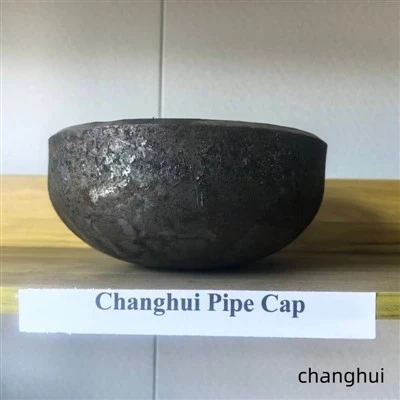
If you’re ready to order, or you just have more questions about shear strength, give me a shout. I’m here to help.
Tank Heads References
- American Welding Society. (2019). Weld End Cap Failure Analysis in Industrial Piping Systems. AWS D10.10: Structural Welding Code – Piping.
- Metals Handbook. (2020). Shear Strength Values for Common Structural Alloys. American Society for Metals.
- Pipe Fabrication Institute. (2018). Best Practices for Weld End Cap Installation and Specification. PFI ES-2: End Connection Standards.
- International Organization for Standardization. (2021). Welded End Caps for Pressure Applications. ISO 10893: Non-destructive testing of steel tubes.
Cangzhou Changhui Head Manufacturing Co., Ltd.
We are one of the most professional weld end caps manufacturers and suppliers in China, featured by quality products and good price. Please rest assured to wholesale durable weld end caps for sale here from our factory. Welcome to view our website for more information.
Address: South Industrial Zone, Yanshan County, Cangzhou City, Hebei Province, China.
E-mail: chunle.zhang@changhuitankhead.com
WebSite: https://www.changhuitankhead.com/
