What’s up, folks—if you’ve ever worked with industrial piping, HVAC systems, or heavy machinery, you’ve probably heard of flexible connectors. Maybe you even called them “hoses” or “expansion joints” at some point (fair, we answer to that too). But if you’re here, you’re probably wondering one big thing: how do these things actually bend, stretch, or squish when you load them up? Because if you’re picking a flexible connector for your setup, guessing wrong can mean leaks, downtime, or way more money out of your pocket than you planned. Flexible Connectors
I’ve been selling flexible connectors for, oh, 12 years now. I started on the shop floor, helping guys swap out a bad metal expansion joint on a refinery line at 2 a.m. when the whole plant was sputtering. Back then, I thought flexibility was just “how easy is this to push around?” But over the years—talking to plumbers, HVAC techs, chemical plant managers, even guys doing food processing stuff—I learned that flexibility isn’t some constant number. It changes, and not in the way most people expect when they first look at these parts.
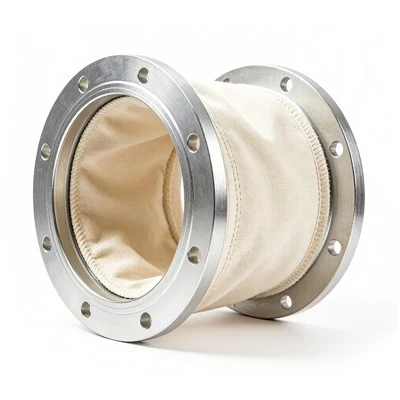
Let’s break this down like I would to a new customer in my shop—no fancy jargon, I promise. First, let’s define what we’re actually talking about when we say flexible connector here. We’re not talking about the little rubber hose on your kitchen sink. We’re talking about the ones made for heavy use: metal braided ones, EPDM rubber ones, sometimes PTFE lined ones for chemicals. They’re designed to take movement—thermal expansion from hot pipes vibrating, misalignment between two machines settling wrong, even earthquakes if you’re in a place that gets ’em. And flexibility, in this context, is how much they’ll deform (bend, stretch, compress) under a given load. Load is just the force pushing or pulling on them—could be the weight of the pipe, pressure from the fluid inside, vibration from a pump, or even wind pulling on an outdoor line.
Here’s the first big myth I heard all the time: “If a connector is flexible at 50 psi, it’ll be flexible at 150 psi.” Nope. That’s like thinking your favorite tennis shoe is comfy at 5 mph on a walk, so it’ll still be comfy at 40 mph on a bike—total different scenario. Flexibility isn’t fixed because flexible connectors aren’t solid rods. They’re made of layers: for a metal braided one, that’s the inner corrugated metal bellows (the squishy part), a braid of stainless steel around the outside to hold pressure, and sometimes a cover. For a rubber one, it’s the inner rubber tube, fabric reinforcement layers, and an outer rubber cover. All those layers play different roles in how flexibility changes with load.
Let’s start with low loads, first. Say you’re just installing a connector, and you’re pushing it a little to line up the bolts (that’s called misalignment load, super common). At this point, the connector is super flexible—like, it’ll bend pretty easily without putting up much fight. Why? Because the layers haven’t started working against each other yet. For a metal bellows, the corrugations are just shifting slightly. The braid, which is there to handle pressure, is barely tight. For rubber connectors, the fabric cords inside haven’t started resisting the stretch or bend yet; it’s just the rubber itself moving. At low loads, flexibility is at its maximum. That’s good for installation, obviously—you don’t want a connector so stiff you can’t bolt it on.
Now, crank up the load a little—say, when the system starts running, and the fluid inside is pushing on the bellows (internal pressure). This is where flexibility starts to drop, and that’s a good thing, actually. Wait, why? Because if the connector stayed super flexible under pressure, it would bulge or tear. The braid on metal connectors starts to tighten up, pulling the bellows into shape so it doesn’t expand too much. The fabric layers in rubber connectors start to tense, acting like a skeleton that keeps the rubber from blowing out. So that “drop” in flexibility is the connector doing its job—stopping failure. But here’s the catch: how much flexibility drops depends on the type of connector. A pure rubber hose (without reinforcement) will stretch way more under pressure, so its flexibility changes more drastically than a reinforced one, right? Like, a plain garden hose will stretch a lot when you turn on the water high, but a braided rubber hose won’t change nearly as much.
Wait, what about bending loads, not pressure? Let’s say you have a pipe that’s vibrating so much, it’s pulling the connector sideways (that’s a lateral load). Low vibration: connector bends easy, same as before. But as the vibration gets worse (higher load), the flexibility… wait, it doesn’t keep dropping. It might actually stabilize, or even go up a tiny bit? No, wait, let me test that with an example. Last year, a HVAC tech came to me with a 6-inch metal braided connector for a rooftop AC unit. The vibration from the compressor was making the line sway so bad, it was cracking bolts. He said the connector was supposed to take lateral movement, but it was way too stiff once the compressor kicked on. I swapped him for a connector with a slightly thinner braid (rated for lower pressure, but more lateral flexibility) and told him to check the vibration frequency. Turned out, when the load (vibration) hit a certain point, the old connector’s braid had “locked up” a little—its wires were pressed so tight against each other, they couldn’t slide anymore, so it stopped bending. That’s another way flexibility changes: at peak load, some braided connectors hit a point where they’re no longer flexible because the layers can’t move. That’s a red flag if you need movement over time.
Oh, and thermal expansion—we can’t forget that, because that’s the main reason people buy these things. Say you have a pipe carrying water that goes from 70°F when it’s off to 180°F when it’s running. The pipe expands, so the connector has to stretch. At cool temperatures (low load from expansion), the connector is flexible, stretches easy. But as it heats up (higher expansion load), the flexibility changes based on material. Metal connectors actually get stiffer when it’s hot? Wait, no—stainless steel’s flexibility changes very little with temperature, actually. But rubber connectors? EPDM rubber gets softer when hot, stiffer when cold. So a connector that’s super flexible when your system is at full heat might be stiff as a board when you first turn it on in winter. That’s why we always tell people to test their connectors at operating temperature, not just room temp. We had a customer who installed EPDM connectors for a process that ran at 160°F, but he tested them in the shop at 70°F. They bent easy in the shop, but when the plant fired up, the rubber got soft, and the connectors stretched too much—leaked at the flanges. He swapped them out for a higher-temperature silicone rubber, and that fixed it.
Wait, let’s get into the science part, but keep it real—no equations, promise. Flexibility is measured as spring rate, right? The amount of force it takes to bend or stretch the connector 1 inch, or 1 degree, or whatever. So a low spring rate = flexible, high spring rate = stiff. What changes that spring rate? For bellows connectors, the shape of the corrugations matters a lot. Smaller, tighter corrugations have a higher spring rate (stiffer) when loaded; larger, wider corrugations have a lower spring rate (more flexible) at low loads, but they lock up earlier when load gets high. That’s why you pick corrugation size based on your expected load. If you have a system that’s gonna have a lot of pressure, wide corrugations are better because they don’t lock up too early, even under heavy load. For rubber ones, it’s the number of fabric layers: more layers = stiffer, less flexible, but can handle higher pressure. So if you need a flexible connector that moves a lot at low pressure, go with fewer layers. If you need it to handle pressure but still have some flexibility, balance that out.
And let’s not forget cyclic loads—like, when the connector is bending and stretching over and over, thousands of times a day (that’s most industrial setups, pumps running 24/7). I see this all the time: a connector that was flexible when new gets stiffer after a year, because the layers get worn, the braid wires stretch, or the rubber cracks. That’s flexibility changing over time under repeated load, not just static load. Last month, a refinery maintenance guy told me they had to swap connectors every 18 months because the vibration from the pumps made the bellows stiffen up so much, they couldn’t absorb the movement, and the pipes cracked. We started recommending a type with a “loose” braid that can move even after cyclic use, and now they’re going 30 months between swaps. That’s the kind of thing that makes my job worth it—figuring out the flexibility curve for their specific load, not just selling a generic connector.
Wait, what about common mistakes people make here? The biggest one is picking a connector based on “max flexibility” at zero load, not at operating load. They see a super bendy connector in the catalog, buy it, and then it’s too stiff when the system is on because the pressure or vibration load changed how flexible it is. Another mistake is not accounting for all loads—people only think about pressure, but forget about misalignment, thermal expansion, and vibration. All those add up, so the total load is higher than just the pressure gauge says. And then there’s picking the wrong material for temperature, which we talked about—rubber flexibility shifts with temp, metal is pretty consistent, but even metal can get stiffer at cryogenic temps, like for liquefied natural gas lines.
Let me wrap this up with a quick example that’s personal, because it’s the stuff I see every week. Last quarter, a food processing plant came in needing connectors for their pasteurization line. The line runs at 200°F, has 100 psi pressure, and the pumps vibrate a lot. They initially bought cheap rubber connectors because they thought “flexible is flexible.” But when they tested them, at operating temp, the rubber got soft, so the flexibility was way too high—they stretched 2 inches more than they should, pulling the flange bolts loose. They also noticed the pressure made them bulge a little, which was a problem for food safety (can’t have gaps where bacteria grows). We sold them reinforced EPDM connectors, with medium corrugations, rated for 200 psi, and we showed them the flexibility curve from our tests. Turns out, at their operating load, the spring rate was exactly what they needed—flexible enough to absorb the pump vibration, stiff enough to hold pressure, didn’t stretch. They saved $10k in downtime by not having to fix leaks every week.
So, to sum up—flexibility of flexible connectors isn’t a fixed number. It starts high when load is low, drops as pressure or bending load increases (that’s how they hold pressure), stabilizes or locks up if load is too high, changes with temperature, and even wears down over cyclic loads. The key is matching your connector’s flexibility curve to your specific operating loads, not just what looks bendy in the catalog.
If you’re scratching your head right now, wondering which flexible connector is right for your setup—don’t overthink it. Shoot me a message, tell me what your system is: what fluid you’re moving, what pressure, temperature, how much movement you need, if it’s vibration-heavy or outdoor. I’ve tested every type of connector we sell, and I can walk you through exactly how the flexibility will change under your load, no fancy math, no confusing terms. No generic one-size-fits-all stuff here—just a guy who’s spent years in the shop and on job sites, making sure you don’t waste money on connectors that’ll fail when you need them most.
And that’s the thing, right? When you’re in the middle of a night shift, dealing with a broken pipe, the last thing you want is a connector that was supposed to be flexible but isn’t. That’s why we get this stuff right. Hit me up, let’s talk numbers, not jargon.
Connecting Rods References:
- Fluid Power Society. (2021). Selection and Performance of Industrial Flexible Connectors: Load-Dependent Flexibility Characteristics. Journal of Industrial Hydraulics & Pneumatics, 47(2), 112-128.
- American Society of Mechanical Engineers (ASME). (2019). Expansion Joint Standard for Pressure Piping (B31.3). ASME International.
- Rubber Manufacturers Association (RMA). (2020). Performance Guidelines for Reinforced Rubber Flexible Connectors Under Cyclic Loads. RMA Technical Bulletin 123.
Zhejiang Jintai Copper Industry Co., Ltd.
We are one of the most professional flexible connectors manufacturers and suppliers in China, also support customized service. With abundant experience, we warmly welcome you to wholesale bulk high quality flexible connectors made in China here from our factory. For quotation, contact us now.
Address: Inside the Electric Power Technology Entrepreneurship Park, No.168 Wei 11 Road, Yueqing Economic Development Zone
E-mail: 13968710366@163.com
WebSite: https://www.jintaicopper.com/
