Hey there! I’m a supplier of warehouse cages, and I often get asked about how to measure the space needed for a warehouse cage. It’s a crucial question because getting the space measurement right can save you a ton of money and hassle in the long run. So, let’s dive into it! Warehouse Cage

Why Measuring Space is Important
First off, why does measuring the space matter? Well, if you don’t measure the space accurately, you might end up with a cage that’s either too big or too small. A cage that’s too big takes up unnecessary space in your warehouse, which could have been used for other things. On the other hand, a cage that’s too small won’t hold all your goods, and you’ll have to get more cages, which can be costly.
Factors to Consider
Before you start measuring, there are a few factors you need to take into account.
Size of Goods
The size of the goods you’re going to store in the cage is a major factor. If you’re storing large, bulky items, you’ll need a bigger cage. For example, if you’re storing furniture, you’ll need a cage with a large volume. But if you’re storing small items like screws or nuts, you can get away with a smaller cage.
Quantity of Goods
How many items you need to store also matters. If you have a large quantity of goods, you’ll need a bigger cage or multiple cages. You need to estimate the total volume of your goods to determine how much space you’ll need.
Accessibility
You also need to think about how you’ll access the goods in the cage. If you need to frequently access the items, you’ll need to leave enough space around the cage for easy movement. This means you might need to allocate more space than just the size of the cage itself.
Measuring the Space
Now, let’s get into the actual process of measuring the space.
Step 1: Measure the Dimensions of the Cage
The first thing you need to do is measure the dimensions of the cage you’re planning to use. Measure the length, width, and height of the cage. Make sure to measure from the outside edges of the cage, including any protruding parts like handles or wheels.
For example, if the cage has a length of 5 feet, a width of 3 feet, and a height of 4 feet, you’ll need to make sure there’s enough space in the warehouse to accommodate these dimensions.
Step 2: Consider the Stacking Factor
If you plan to stack the cages, you need to account for the additional height. When cages are stacked, there might be some space between them for stability. So, you need to measure the height of a single cage and then multiply it by the number of cages you plan to stack, adding a little extra space for the gaps between the cages.
Let’s say you’re stacking 3 cages, and each cage is 4 feet high. If you estimate a 6 – inch gap between each cage, the total height you need to account for is (4 feet x 3) + (0.5 feet x 2) = 12 + 1 = 13 feet.
Step 3: Leave Space for Movement
As I mentioned earlier, you need to leave enough space around the cage for easy movement. A good rule of thumb is to leave at least 2 – 3 feet of space around the cage. This will allow your employees to move around the cage, load and unload goods, and perform other tasks without any issues.
Step 4: Account for Aisle Space
If you have multiple cages in your warehouse, you need to consider the aisle space between them. The width of the aisle depends on the type of equipment you’ll use to move the cages. For example, if you’re using a forklift, you’ll need a wider aisle than if you’re using a hand – cart. A typical aisle width for a forklift is around 8 – 10 feet.
Calculating the Total Space
Once you’ve measured all the necessary dimensions, you can calculate the total space needed for the warehouse cage.
Let’s say you have a cage with dimensions 5 feet (length) x 3 feet (width) x 4 feet (height), and you’re stacking 3 cages with a 6 – inch gap between each cage. You also leave 2 feet of space around the cage and a 10 – foot aisle space.
The total length of the space needed is 5 feet (cage length) + 2 feet (space on one side) + 2 feet (space on the other side) = 9 feet.
The total width of the space needed is 3 feet (cage width) + 2 feet (space on one side) + 2 feet (space on the other side) = 7 feet.
The total height of the space needed is 13 feet (stacked cage height).
The total volume of the space needed is 9 feet x 7 feet x 13 feet = 819 cubic feet.
Tips for Efficient Space Utilization
Here are some tips to make the most of the space in your warehouse:
- Use Vertical Space: As we saw with the stacking example, using vertical space can significantly increase the storage capacity of your warehouse. Make sure your warehouse has a high enough ceiling to accommodate stacked cages.
- Optimize Cage Placement: Arrange the cages in an organized manner to minimize wasted space. You can use a grid system or a layout that allows for easy access to all the cages.
- Regularly Review and Reorganize: As your inventory changes, regularly review the placement of your cages and reorganize them if necessary. This will ensure that you’re using the space as efficiently as possible.
Conclusion
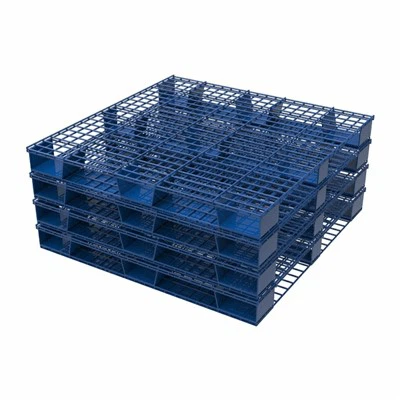
Measuring the space needed for a warehouse cage is not as complicated as it might seem. By considering the size and quantity of your goods, the stacking factor, movement space, and aisle space, you can accurately calculate the space required. And by following the tips for efficient space utilization, you can make the most of your warehouse space.
Foldable Stillage Cage If you’re in the market for warehouse cages and need help with space measurement or have any other questions, don’t hesitate to reach out. We’re here to help you find the perfect solution for your storage needs.
References
- "Warehouse Design and Layout" – Industrial Engineering textbooks
- Industry best practices from warehouse management associations
Taizhou Ziyue Metal Products Co., Ltd.
As one of the leading warehouse cage manufacturers in China, we offer a wide range of products with superior quality. We warmly welcome you to wholesale bulk warehouse cage for sale here and get quotation from our factory. For price consultation, contact us.
Address: No. 18, Gudun Line, Industrial Agglomeration Area, Fenjie Town, Taixing City, Taizhou City, Jiangsu Province
E-mail: 18352658999@163.com
WebSite: https://www.ziyuemetal.com/
