

What Makes Pixie Oranges the Next Big Thing in Kenyan Agriculture?
Ready to discover Kenya’s sweetest agricultural secret? Pixie farming isn’t just another trend – it’s transforming those sun-baked lands you thought couldn’t grow much into gold mines of juicy goodness.
These small, sweet citrus fruits have taken the Kenyan market by storm, and for good reason. They’re easier to peel than regular oranges, crazy juicy, and have this knock-your-socks-off aroma that literally fills rooms. Cut open a pixie in your kitchen, and someone in the living room will come running to see what that amazing smell is.
What’s even better? Kenya’s hot, semi-arid regions create the perfect growing conditions for these little flavor bombs. Areas like Makueni, Machakos, and Kitui counties are already seeing major success with pixie farming, while coastal areas and parts of central Kenya are quickly catching up.
Why Start Pixie Farming Now?
The market for pixies in Kenya is seriously hot right now. Local demand is through the roof, but production can’t keep up – creating a golden opportunity for anyone looking to get into the game. With retail prices hovering around Ksh150 per kilogram and potential yields of about ten tonnes per acre, we’re talking about possible revenue of Ksh1.5 million per acre at harvest time.
Compare that to conventional oranges, which would need about 30 tonnes from the same land to make similar money. The math speaks for itself.
Ready to jump in? Let’s break down exactly how to start your pixie farming journey.
Step 1: Choose the Perfect Location for Your Pixie Farm
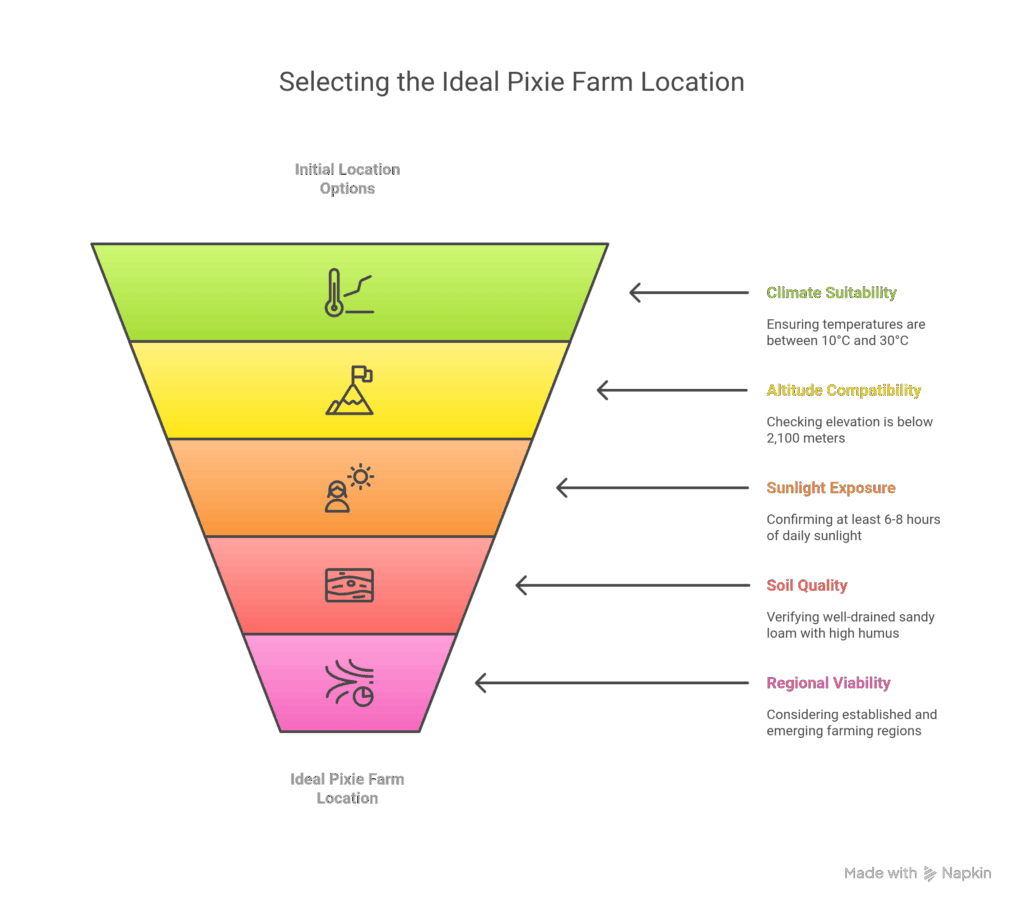
First things first – let’s find the right spot for your citrus empire. Here’s what to look for:
- Climate: Pixies thrive in temperatures between 10°C and 30°C. They can handle heat, but anything above 38°C can damage the fruit.
- Altitude: They grow well at elevations up to 2,100 meters above sea level.
- Sunlight: Make sure your location gets plenty of sunlight – pixies need at least 6-8 hours daily.
- Soil: The sweet spot is well-drained sandy loam soil with high humus content. The soil pH should ideally be between 6.5 and 7.3.
- Regions: Beyond the established Makueni, Machakos, and Kitui counties, consider areas like Baringo, coastal regions (Kwale and Taita Taveta), or parts of Nyeri, Murang’a, and western Kenya.

Step 2: Get Your Soil Game Right
Before planting a single tree, get to know your soil:
- Test your soil: This is non-negotiable. Get a proper analysis to determine pH levels and nutrient status.
- Prepare for amendments: Based on test results, you might need to add lime (if too acidic) or sulfur (if too alkaline).
- Build organic matter: Mix in plenty of compost and manure to improve soil structure and water retention.
Remember: Your pixie trees will be with you for years – taking time to get the soil right from day one will pay massive dividends down the road.


Step 3: Sourcing and Propagating Pixie Trees
Here’s something crucial to know – pixie oranges are seedless, which means you can’t just plant seeds and hope for the best. Instead:
- Find grafted seedlings: Look for reputable nurseries specializing in pixie varieties.
- Understand the grafting: Pixies in Kenya are propagated through grafting techniques using lemon rootstocks with pixie scions.
- Quality check: Choose vibrant, disease-free seedlings with healthy leaves and stems.
If you’re feeling adventurous and want to try grafting yourself:
- Grow lemon seedlings until they reach pencil thickness
- Obtain pixie scions from mature, healthy trees
- Use the bud grafting method, which is most common in Kenya
- Give the graft time to heal and establish before transplanting
Step 4: Plant Your Pixie Trees Like a Pro
Time to get those trees in the ground! Here’s how:
- Prepare planting holes: Dig holes measuring 2ft × 2ft × 2ft.
- Add nutrition: Mix about 20kg of well-rotted manure with topsoil in each hole.
- Space properly: Plant trees with 4-5 meters between them. This spacing allows for about 200 trees per acre.
- Timing matters: Plant at the start of the rainy season to give trees natural irrigation during establishment.
Planting Day Checklist:
- Carefully remove seedling from container without disturbing roots
- Position the graft union above soil level (super important!)
- Fill hole with soil-manure mixture, gently firming around roots
- Create a basin around the tree for water collection
- Water thoroughly after planting
- Apply mulch around the base (but not touching the trunk)
Step 5: Water Management That Makes Sense
In Kenya’s drier regions, smart water management can make or break your pixie farm:
- During establishment: Young trees need regular watering – about 10-15 liters twice weekly.
- Mature trees: Once established, pixies are relatively drought-tolerant but still need consistent moisture for good fruit production.
- Irrigation systems: If possible, invest in drip irrigation – it’s water-efficient and delivers moisture right to the root zone.
- Mulching: Apply organic mulch around trees (keeping it away from the trunk) to conserve soil moisture and suppress weeds.
Step 6: Feeding Your Pixie Trees
Hungry trees don’t make sweet fruit. Here’s your fertilizer game plan:
- Year 1: Focus on nitrogen to promote vegetative growth – about 100g of CAN per tree, split into 3-4 applications.
- Years 2-3: Balanced NPK fertilizer as trees begin fruiting.
- Mature trees: Increase to about 500g NPK per tree annually, applied before flowering and after harvest.
- Organic options: Complement chemical fertilizers with compost and well-rotted manure applied annually.
Step 7: Pruning for Perfect Production
Regular pruning keeps your pixie trees healthy and productive:
- Formative pruning: Shape young trees by removing unwanted branches and establishing a strong framework.
- Maintenance pruning: For mature trees, focus on:
- Removing dead or diseased branches
- Thinning overcrowded areas
- Controlling height (mature pixie trees grow to about 4 meters)
- Improving air circulation and light penetration
Pro tip: Prune after harvest or before the new growth flush for minimal stress on the tree.
Step 8: Pest and Disease Management
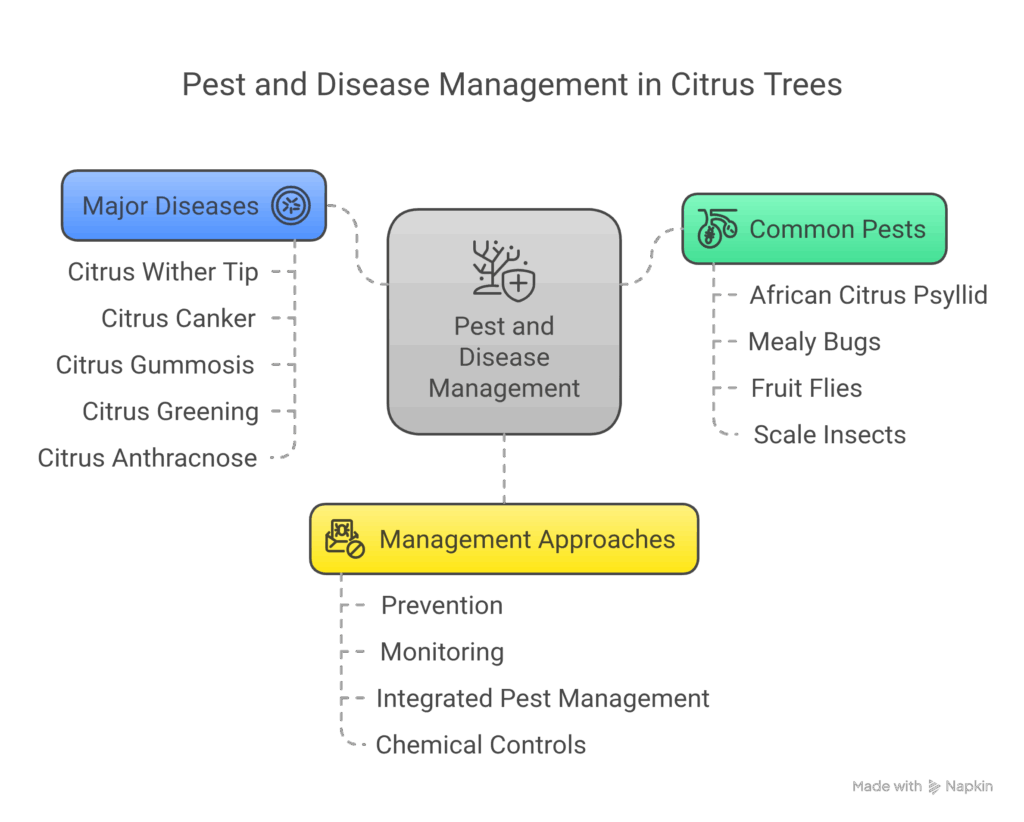
The warm conditions that pixies love unfortunately create perfect environments for pests and diseases. Stay vigilant for:
Common Pests:
- African citrus psyllid (transmits greening disease)
- Mealy bugs (cause black, sticky leaves)
- Fruit flies
- Scale insects
Major Diseases:
- Citrus wither tip (Colletotrichum gloeosporioides)
- Citrus canker (Xanthomonas citri)
- Citrus gummosis (Phytophthora spp.)
- Citrus greening
- Citrus anthracnose
Management Approaches:
- Prevention: Maintain tree health through proper nutrition and watering
- Monitoring: Inspect trees regularly for early detection
- Integrated Pest Management: Use biological controls when possible
- Chemical controls: Apply appropriate pesticides as a last resort, following recommended guidelines

Step 9: Harvesting Your Pixie Gold
The moment you’ve been waiting for – harvest time!
- Timeline: Grafted pixies start producing their first fruits in the second year after planting
- Early yields: Expect 30-50 fruits per tree initially
- Peak production: By years 4-5, each tree can produce up to 300 fruits (about 60kg per tree)
- Harvesting technique: Cut fruits with scissors or clippers, leaving a small stem attached
- Handling: Treat harvested pixies gently to prevent bruising
Step 10: Getting Your Pixies to Market
Here’s where many farmers stumble – don’t let marketing be your downfall:
- Grading: Sort your harvest by size and quality
- Packaging: Use appropriate containers that protect fruit during transport
- Market options:
- Direct to consumer at farm gate or local markets
- Supply to supermarkets and fruit vendors
- Partner with exporters (for international markets)
- Process into juice or other products
Beating the Middleman Game:
- Form or join farmer groups for collective bargaining power
- Explore direct marketing through social media and digital platforms
- Build relationships with high-end hotels and restaurants for premium pricing
- Consider value addition through processing or packaging
The Pixie Farming Timeline: What to Expect
Let’s be real – pixie farming isn’t an overnight success story. Here’s the typical timeline:
| Year | Development Stage | Expected Yield | Management Focus |
|---|---|---|---|
| 1 | Establishment | None | Growth, protection, nutrition |
| 2 | Initial fruiting | 30-50 fruits/tree | Formative pruning, pest management |
| 3 | Increasing production | 100-150 fruits/tree | Balanced nutrition, disease control |
| 4-5 | Full production | Up to 300 fruits/tree | Maintenance pruning, market development |
| 5+ | Sustained production | 60kg+ per tree | Rejuvenation pruning, soil health |
Challenges You Might Face (And How to Beat Them)
Every farming venture has its hurdles. Here’s what to watch for:
- Climate extremes: Implement water harvesting and conservation techniques; consider shade nets for extreme heat periods
- Pest and disease pressure: Stay informed about the latest management techniques; join farmer groups to share knowledge
- Market fluctuations: Diversify your market channels and consider value addition options
- Poor infrastructure: Form cooperatives to improve transportation and storage options
- Water scarcity: Invest in efficient irrigation systems and water harvesting structures

The Bottom Line: Is Pixie Farming Worth It?
Let’s talk money. With proper management, here’s what you could see:
- Initial investment: About Ksh250,000-300,000 per acre (including land preparation, seedlings, irrigation setup)
- Annual maintenance costs: Approximately Ksh50,000-70,000 per acre
- Break-even point: Usually around year 4
- Potential annual revenue at full production: Ksh1.5 million per acre
While patience is required – real profitability kicks in around year 5 – the long-term economics make sense. Pixie trees can remain productive for 15+ years with proper care, creating a sustainable income stream long after your initial investment is recovered.
Ready to Start Your Pixie Farming Journey?
Pixie farming offers a golden opportunity for Kenyan agriculture, especially in regions traditionally considered challenging for farming. With growing consumer demand, favorable pricing, and suitable growing conditions across multiple counties, now’s the perfect time to get started.
Remember – successful pixie farming combines proper planning, patience, and consistent management. The trees might take a few years to reach full production, but once established, they’ll reward you with sweet returns for many years to come.
Have you already started growing pixies or planning to jump in? Drop a comment below about your experience or questions – I’d love to hear your pixie farming stories!
Want to learn more about citrus farming in Kenya? Check out additional resources on pest management and other citrus varieties to complement your pixie farming venture.